Practical Advances in Geomembrane Solutions for Infrastructure, Agriculture and Waste Management
Geomembranes are essential components across infrastructure, waste management and agricultural water systems. Selecting the right material and understanding installation and long-term performance factors helps engineers, procurement teams and farm operators control risk, extend service life and reduce maintenance costs. This article summarizes current product options, practical design considerations and how manufacturers support specification and supply.
Why geomembranes matter
Geomembranes serve as impermeable barriers that contain liquids, prevent cross-contamination and protect soil and groundwater. Applications include landfill liners and caps, leachate collection systems, containment for hazardous materials, reservoir and pond linings, and floating covers. Proper material selection and quality-controlled manufacturing are critical to meet application demands such as tensile strength, puncture resistance and UV stability.
Key product types and where to use them
MegaLiners and geomembrane families
Megaplast offers geomembrane products under the MegaLiners family. For detailed product pages and specifications, see the company’s
Geomembranes overview and the dedicated
MegaLiners page.
HDPE Liners — for high-strength, low-permeability needs
High-density polyethylene options such as Megaplast’s
HDPE Liners are typically chosen where high tensile strength, chemical resistance and very low permeability are required. HDPE liners are commonly specified for landfill liners, hazardous-waste containment and leachate collection systems because of their durability and resistance to many aggressive environments.
LLDPE Liners — for flexibility and dynamic conditions
Linear low-density polyethylene liners combine flexibility and elongation, making them suitable for applications where the liner must accommodate deformation or settlement. Megaplast’s
LLDPE Liners are positioned for projects such as landfill caps, leach pads, floating covers and sites subject to differential movement.
Pond Liners — water storage and aquaculture
For agricultural and aquaculture uses,
Pond Liners made from high-quality PE (available in 0.5–2 mm thickness ranges per product offerings) provide low permeability and high UV stabilization. These liners are intended for fish ponds, irrigation reservoirs and water storage tanks where long-term resistance to sunlight and environmental exposure is important.
Material variants and surface textures
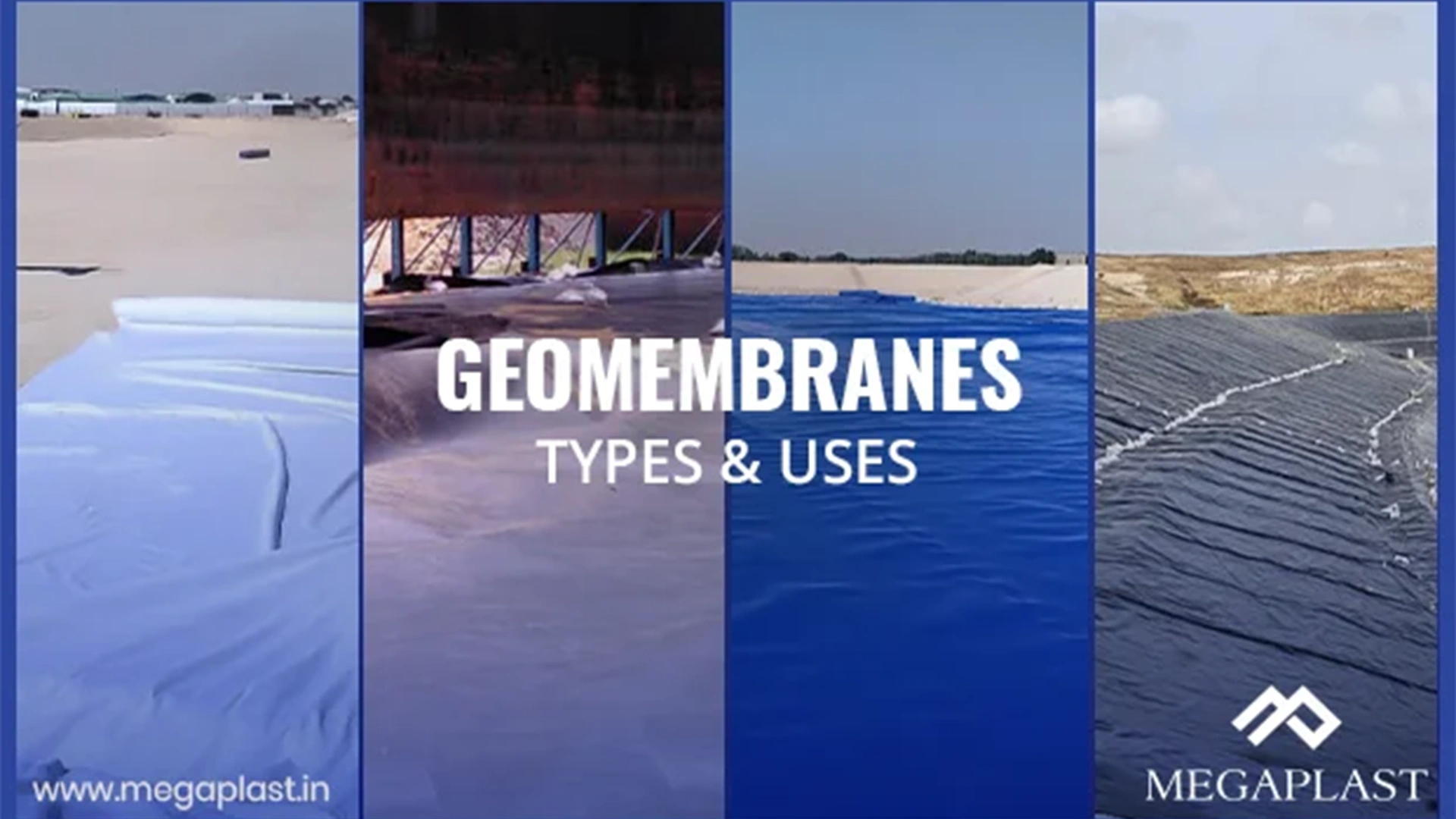
Geomembranes are available in smooth, single-textured and double-textured variants. Textured surfaces improve friction and ballast performance when a geosynthetic cover or soil overlay is placed on top of the liner, while smooth variants are used where low permeability and ease of welding are priorities. Choose texture and material based on project slope, ballast type and overlay design.
Practical design and procurement considerations
-
Specification first
Define design life, expected chemical exposure, temperature range and mechanical loads. These factors drive the choice between HDPE, LLDPE and specific product grades such as Mega Diamond, Mega Platinum or Mega Gold within HDPE families.
-
Welding and seam quality
Seams are typically the most vulnerable part of a geomembrane system. Specify qualified installers and witness testing procedures. Factory and field weld procedures should be documented and tested per project requirements.
-
Handling and protection
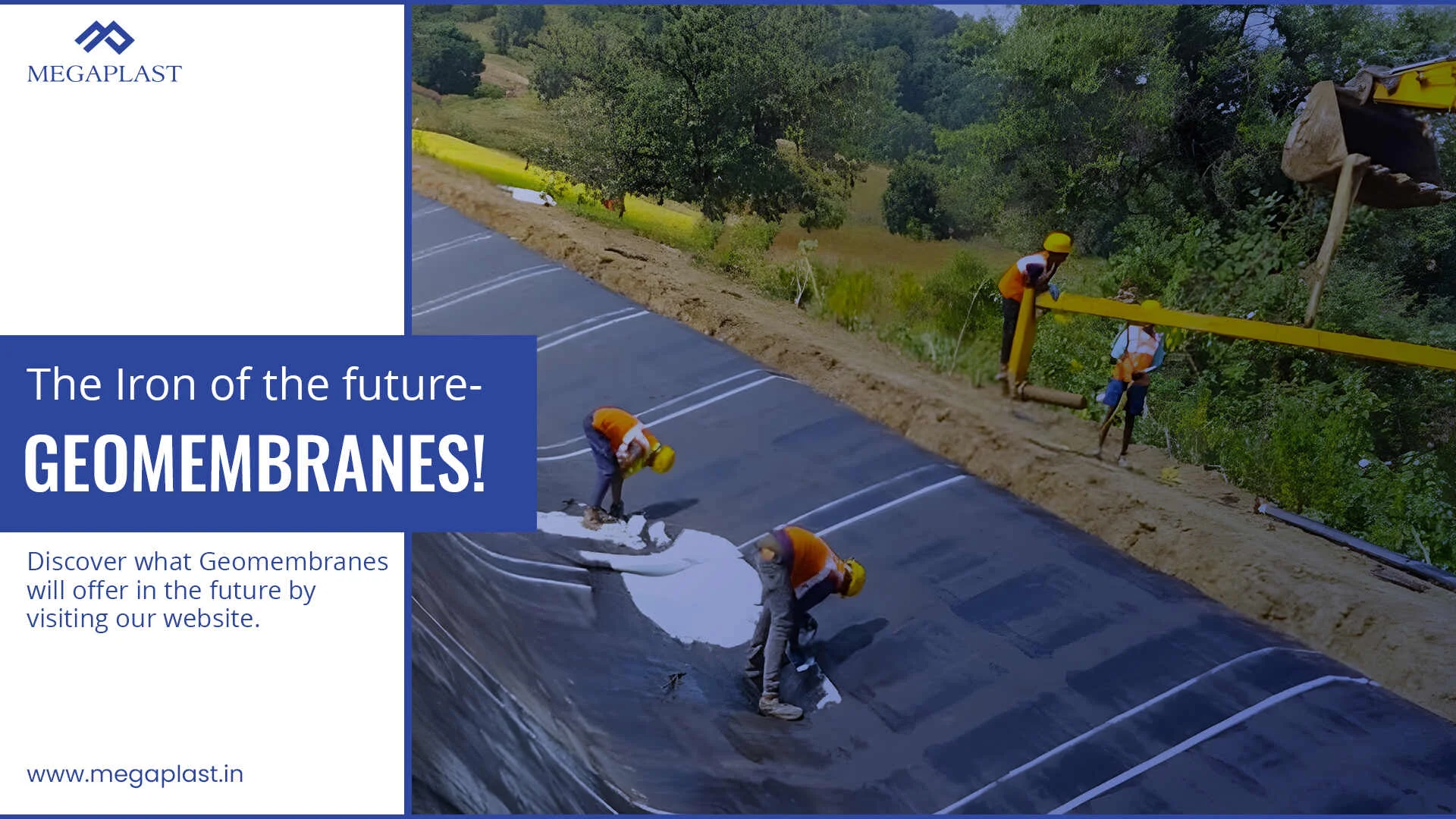
During installation, protect liners from puncture and tear with geotextiles, sand cushions or sacrificial layers where necessary. Schedule installation to avoid prolonged UV exposure for stored rolls.
-
Inspection and testing
Include post-installation inspection, non-destructive seam testing and an as-built QA/QC plan in procurement contracts to reduce lifecycle risk.
Manufacturing quality and innovation
Reliable supply and consistent manufacturing support project outcomes. Megaplast operates with more than 19 years of experience, a 300,000 sq. ft. manufacturing footprint, an annual capacity of 24,000 MT and a global presence in 30+ countries. Its GAI-LAP- and NABL-certified Innovation Centre supports product validation and production quality control, helping translate design requirements into manufacturable geomembrane solutions.
Looking ahead: sustainability and smart systems
The geomembrane industry is focusing on reducing environmental impact, improving recyclability and enhancing long-term performance. Advances under development across the sector include improved UV stabilizers, manufacturing efficiencies that lower waste, and integration of monitoring technologies—such as embedded sensors for temperature or pressure—that can inform maintenance and performance management. Manufacturers with strong R&D and testing capabilities can help designers evaluate these options for practical deployments.
Conclusion
Choosing the right geomembrane means matching material properties, texture and installation practices to the project’s mechanical, chemical and environmental demands. Engineers and procurement teams benefit from partnering with manufacturers who combine robust production capacity with testing and validation capabilities to deliver consistent, fit-for-purpose geomembrane solutions.
Talk to Megaplast
To discuss technical specifications, samples or project timelines,
request a quote or
contact Megaplast. For geomembrane-specific enquiries, reference the
MegaLiners or product family you are considering and include application details—you can also email
info@mega-group.in or connect with us on WhatsApp at +91 83569 01123 for direct assistance.