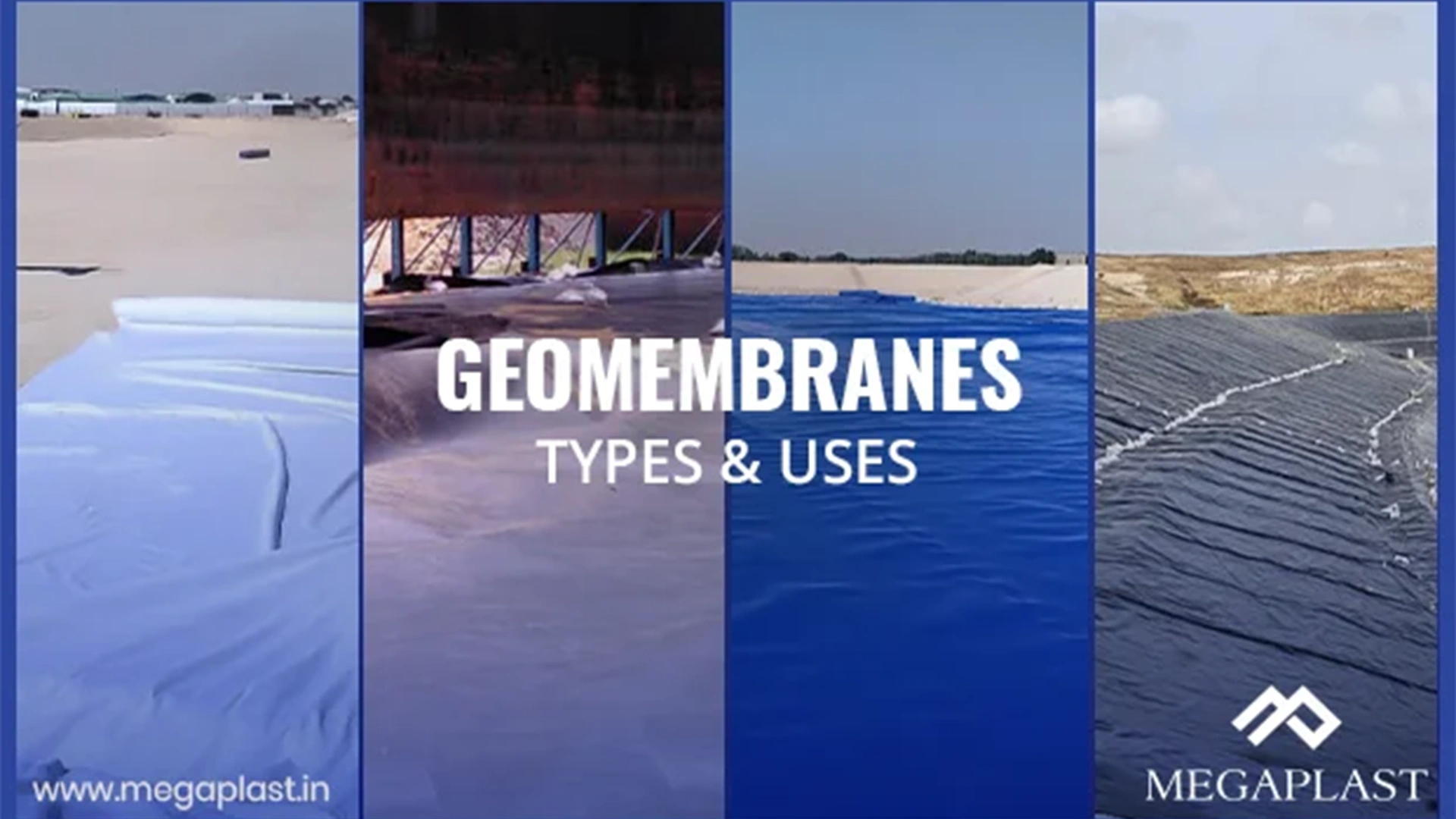
Types of Geomembranes: HDPE vs LLDPE, Smooth vs Textured
Selecting the right geomembrane is a critical decision for containment and lining projects across
waste management, water storage, mining and civil engineering. This guide summarizes common
geomembrane variants, explains where each performs best, and highlights practical selection and
installation considerations for procurement teams and design engineers.
Types of Geomembranes and Applications
HDPE Smooth
High-density polyethylene smooth geomembranes are commonly specified where low permeability,
chemical resistance and long-term dimensional stability are priorities. Megaplast’s
MegaLiners
HDPE range is positioned for high strength, tear and puncture resistance, and UV stability.
These characteristics make HDPE smooth sheets well suited to landfill liners, containment basins
and water containment where mechanical durability and chemical resistance are required.
See the HDPE product family for variant options:
HDPE Liners.
HDPE Textured
Textured HDPE geomembranes add a roughened surface on one or both faces to increase interface
friction with the subgrade or overlying layers. This friction advantage is important on steep
slopes, vertical faces and engineered closures where slippage risk must be minimised. Textured
HDPE retains the material’s inherent chemical resistance and tensile strength while improving
stability under load.
LLDPE Smooth
Linear low-density polyethylene (LLDPE) smooth geomembranes are selected for applications that
require greater flexibility and elongation than HDPE. LLDPE’s higher elongation capacity helps
the liner conform to settlement, differential movement, or complex detail work.
Megaplast’s
LLDPE Liners
are positioned for dynamic conditions such as landfill caps, leach pads, floating covers and
other containment scenarios where folding, bending or movement is expected.
LLDPE Textured
Combining the elongation of LLDPE with a textured surface produces a liner suitable for steep
slopes and layered systems that need both flexibility and increased friction. LLDPE textured sheets
are frequently used where the liner must maintain contact with irregular subgrades or where overlap
stability between layers is important.
Pond Liners and Agricultural Uses
For aquaculture, irrigation ponds and water storage, Megaplast offers purpose-built
Pond Liners
made from high-quality PE. These liners are described on the site as 100% virgin PE, low
permeability and highly UV-stabilized—features that are relevant for exposed water containment
and long-term outdoor service.
How to Choose the Right Geomembrane
- Define the Containment Threat: Chemical exposure, solvents, hydrocarbons or
leachate chemistry will influence material selection. HDPE is often preferred for aggressive
chemistries due to its chemical resistance.
- Assess Expected Movement and Deformation: Specify LLDPE where high elongation
and flexibility are necessary for settlement, folds or floating applications.
- Consider Slope and Interface Stability: Textured surfaces increase friction
and are recommended for steep slopes, covers and vertically engineered installations.
- Review Installation Conditions: Access, seaming method such as heat welding,
available equipment and weather constraints can affect the choice of thickness and material.
- Confirm QA/QC and Testing Needs: Require factory inspection and site testing,
including seam testing, peel and shear tests, as part of procurement and installation contracts.
Installation and Quality Considerations
- Use Qualified Installers: Use qualified installers experienced in welding
geomembrane seams and performing non-destructive seam tests.
- Inspect the Subgrade: Remove sharp objects, level changes and debris to reduce
puncture risk and improve seam integrity.
- Plan for Overlap and Anchoring: Follow manufacturer guidance for overlap
widths, anchor trenches and ballast where required.
- Testing and Documentation: Include destructive and non-destructive seam
testing, continuity checks and a record of weld locations as deliverables from the installer.
- Leverage Manufacturer Support: Megaplast operates a GAI-LAP- and
NABL-certified Innovation Centre for product development and testing. Consult the manufacturer
for technical data and testing support when specifying materials.
Conclusion
Choosing between HDPE and LLDPE, and between smooth and textured surfaces, depends on the site
conditions, expected loads and chemical exposures. Align material choice to project-specific risks
such as chemical attack, deformation, slope stability and UV exposure, and specify clear QA/QC and
installation controls to protect long-term performance.
Talk to Megaplast
Ready to finalise material selection or request technical data sheets? Discuss your project
requirements and receive a tailored recommendation for MegaLiners, HDPE or LLDPE options.
You can
request a quote
or
contact Megaplast
to start the conversation.
For quick queries, email
info@mega-group.in
or message us on WhatsApp at +91 83569 01123 or call us at +91 22-61066000.