High-Grade Plastic Films: How to Choose the Right Material for Your Project
Selecting the right plastic film grade can determine the success, longevity,
and total cost of a project—whether you are specifying geomembranes for
containment, liners for aquaculture, or films for industrial packaging.
Megaplast brings 19+ years of manufacturing experience, a 300,000 sq. ft.
production footprint, 24,000 MT annual capacity, and a GAI-LAP- and
NABL-certified Innovation Centre to help technical teams and procurement
professionals choose the appropriate material and formulation.
Why Material Grade Matters
High-grade plastic films deliver dependable performance across three
practical dimensions:
- Mechanical Reliability:
Resistance to tearing, puncture, and abrasion reduces failure risk
during installation and service life.
- Environmental Stability:
UV- and chemical-stable formulations help reduce degradation in
exposed installations.
- Application Fit:
Flexibility, elongation, and texture affect ease of installation,
seam quality, and interface performance with soils or structures.
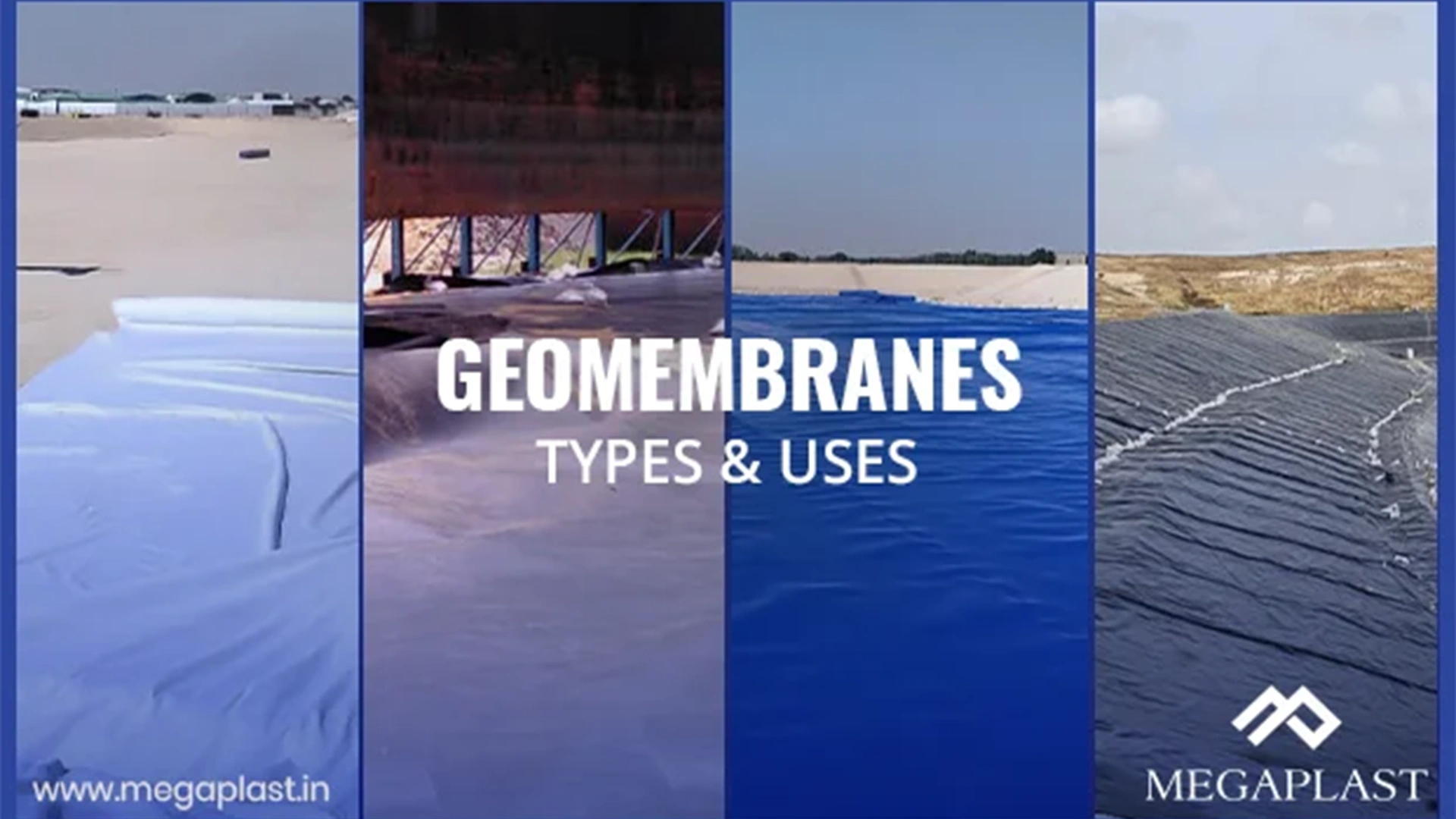
Megaplast’s geomembrane family, sold under the
MegaLiners
brand, is engineered with these priorities in mind and is available in
smooth, single-textured, and double-textured variants to suit different
site needs.
Strength, Puncture and Chemical Resistance: HDPE
For applications that demand high tensile strength and low permeability,
such as landfill liners, containment basins, and heavy-duty civil projects,
high-density polyethylene formulations are often specified.
Megaplast’s
HDPE Liners
,
including Mega Diamond, Mega Platinum, and Mega Gold variants, are
positioned for high-strength, low-permeability requirements.
Flexibility and Elongation: LLDPE
Where dynamic loading, uneven subgrade, or floating covers require greater
elongation and adaptability, linear low-density polyethylene variants are
appropriate.
Megaplast’s
LLDPE Liners
are recommended for applications such as landfill caps, leach pads,
floating covers, and situations where flexibility at low temperatures
helps reduce stress concentrations.
Pond Liners and Agricultural Uses
Pond liners used for fish ponds, agricultural ponds, irrigation reservoirs,
and water storage tanks require low permeability and strong UV stability.
Megaplast’s
Pond Liners
are made from high-quality PE in thicknesses typically between 0.5–2 mm
and are described on the site as 100% virgin PE with high UV stabilization.
These characteristics are appropriate for long-term water containment
in agricultural settings.
For wider farm-film requirements, explore the
Agricultural Films
category.
Choosing the Right Plastic Film: Practical Guidance
Consider these criteria when specifying or procuring plastic films:
- Application and Loads:
Consider whether the film will be used for static water storage,
engineered containment, or packaging. Choose HDPE for high
strength and low permeability, and LLDPE where elongation is critical.
- Environmental Exposure:
UV exposure, chemicals, temperature cycles, and abrasion risk
determine the required stabilisation and surface texture.
- Thickness and Texture:
Thicker membranes can improve puncture resistance, while textured
surfaces can improve interface friction on slopes.
- Seam Performance and Installation:
Welding quality and installer experience often influence long-term
performance. Specify qualified installation procedures and testing
requirements.
- Testing and Validation:
Leverage laboratory testing and field verification. Megaplast’s
Innovation Centre supports product testing and formulation development.
- Supply and Lead Time:
Confirm manufacturing capacity and delivery timelines relative to
project schedules. Megaplast serves customers in 30+ countries and
has large-scale manufacturing capacity.
Selection Checklist for Plastic Film Specifications
- Define the required design life and applicable safety factors.
- Document anticipated static and dynamic loads and contact media,
including water, leachate, or chemicals.
- Specify the required thickness range and surface texture,
including smooth, single-textured, or double-textured options.
- Require seam testing and acceptance criteria in contract documents.
- Request material data sheets and, where relevant, sample rolls
for prequalification.
Installation and Lifecycle Considerations
Proper storage, handling, and installation reduce damage risks before
commissioning. Common best practices include protecting rolls from
sharp objects, using trained welders for seams, performing
nondestructive seam inspections, and scheduling regular in-service
inspections.
For agricultural settings, integrate liner selection with irrigation
and drainage plans to avoid concentrated stresses and support reliable
long-term performance.
How Megaplast Supports Projects
Megaplast manufactures a wide range of films and liners across industrial
and agricultural categories.
For containment and geomembrane projects, the
Industrial Liners
and
MegaLiners
families offer HDPE and LLDPE options tailored to site needs.
For farm and aquaculture applications, the
Pond Liners
page outlines suitable grades and typical thickness ranges.
The company’s scale, including 19+ years of experience, 400+ professionals,
and 24,000 MT annual capacity, together with an accredited Innovation
Centre, provides practical support for material selection, testing,
and scale production.
Conclusion
Choosing the appropriate high-grade plastic film requires balancing
mechanical needs, environmental exposure, and installation realities.
By matching material type, thickness, and texture to project requirements,
and by engaging a supplier with testing capability and production capacity,
engineers and procurement teams can reduce risk, lower lifecycle costs,
and achieve reliable performance.
Talk to Megaplast
If you need specification support or a project quote,
request a quote
or
contact Megaplast
to discuss product options such as
MegaLiners
or
Pond Liners
.
You can also reach the team at
info@mega-group.in
connect with us on WhatsApp at +91 83569 01123 for technical enquiries and lead-time estimates.