PE Stretch Film: Types, Applications and Selection Guide
Introduction
Stretch films made from polyethylene (PE) are a simple, cost-effective
way to secure, protect, and stabilise packaged goods and pallet loads
during storage and transit. For procurement teams, logistics managers,
and engineers, the right stretch film can reduce load damage, improve
pallet integrity, and lower total packaging costs when matched to the
application.
Why Use PE Stretch Film?
- Load Containment:
Multiple wraps provide lateral and top-to-bottom stability for
stacked goods and palletised loads.
- Surface Protection:
Stretch film shields packaged goods against dust, light abrasion,
and incidental contact during handling and transportation.
- Flexibility:
The film conforms to irregular shapes and helps protect fragile
or oddly shaped items without leaving adhesive residues.
Types of PE Stretch Films
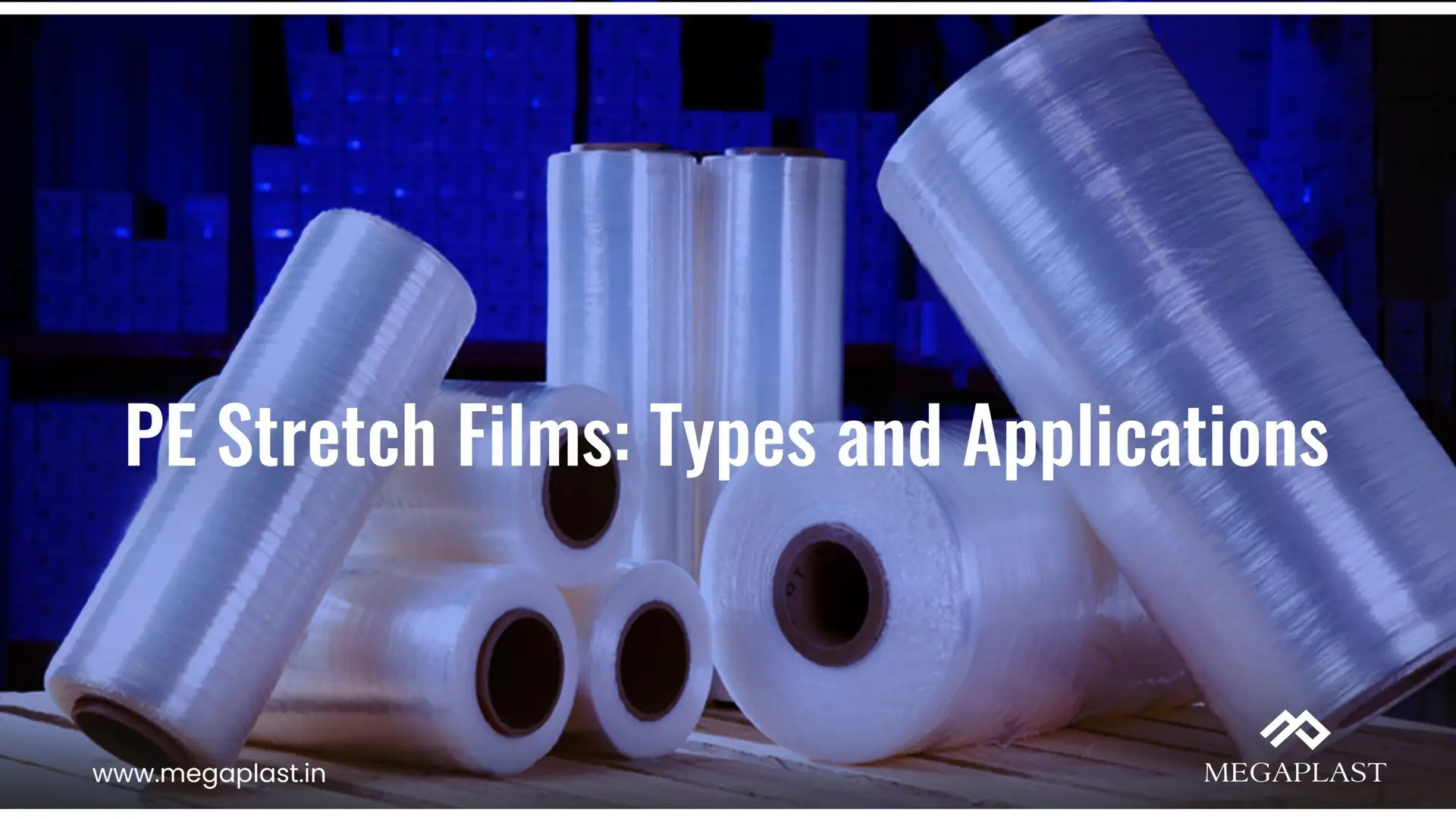
Machine-Grade (Cast) Stretch Films
Machine-grade films are formulated for automated or semi-automated
wrapping equipment. Typical characteristics include high clarity,
controlled pre-stretch capability to optimise material usage,
consistent roll length, and quiet unwind.
Megaplast manufactures multi-layer cast films with up to five layers
and can supply wide formats when required, supporting high-throughput
packaging lines.
Hand-Grade Stretch Films
Hand-grade films are intended for manual wrapping. They are designed
for easier initial cling and a balance of stretch and tack, allowing
operators to secure medium-to-light loads quickly.
Hand-grade stretch films are commonly used in warehouses, small-scale
packaging operations, and on-site load locking.
How Film Construction and Features Affect Performance
- Multi-Layer Construction:
Combining multiple layers allows manufacturers to balance cling,
puncture resistance, and elongation. Megaplast produces films with
up to five layers, helping tailor film construction to specific
performance requirements.
- Cling vs. Tack:
One-sided cling helps prevent outer layers from sticking to the
load, while higher tack increases film-to-film adhesion for
improved load retention.
- Pre-Stretch and Gauge:
Machine wrappers use pre-stretch to extend film and reduce gauge
requirements. For manual applications, a slightly thicker gauge
can improve puncture resistance while maintaining stretch.
- Quiet Unwind and Roll Handling:
These characteristics are important on fast packaging lines to
reduce noise and operator fatigue while maintaining consistent
film tension.
Common Applications and Selection Tips
- Palletised Bulk Goods:
Select machine-grade, high-elongation film to achieve uniform
containment with lower film usage. Consider films available in
wide roll formats for large pallets.
- Heavy and Abrasive Loads:
For bagged materials and other demanding loads, prioritise
puncture resistance and multi-layer constructions. Confirm
compatible roll widths and core sizes for the wrapping equipment.
- Fragile Items:
For glass, ceramics, and similar products, use films with good
cling control and high clarity to minimise slippage while
allowing visual inspection.
- Irregular or Mixed Loads:
Hand-grade or hybrid films that offer good conformability and
controlled cling can perform well for odd-shaped or mixed
consignments.
Related Industrial Film Options
Stretch film is one of several PE solutions used for industrial
packaging. For other wrapping and protective requirements, consider
complementary products such as
Stretch Hood Films
for complete top-and-side protection, or other roll formats under
PE Films in Roll Form
.
For integrated packaging lines, Megaplast also supplies
FFS Films
and a broader
Industrial Packaging
portfolio.
Manufacturing and Quality Assurance
Megaplast has more than 19 years of experience supplying industrial
PE films and operates large-scale manufacturing capabilities to serve
domestic and international customers.
The company develops and tests products using its in-house Innovation
Centre, which is GAI-LAP- and NABL-certified, providing centralised
support for product development and quality verification.
Specifying Film with Procurement Teams
When issuing a purchase specification or RFQ, include the following
information:
- Application and Load Dimensions:
Provide the intended application along with typical pallet and
load dimensions.
- Wrapping Method:
Specify whether the film will be used for machine or hand
wrapping. For machine wrapping, include the wrapper model where
relevant.
- Roll Specifications:
Define desired roll widths and core sizes, along with any
wrapper compatibility constraints.
- Primary Performance Priorities:
Identify key requirements such as cling, puncture resistance,
stretch capability, and maximum elongation.
- Environmental Conditions:
Specify expected storage and transportation conditions, including
indoor, outdoor, and long-haul applications.
Conclusion
Choosing the right PE stretch film can reduce damage, improve pallet
stability, and lower material use when the film is properly matched
to application requirements.
Working with suppliers that can provide multi-layer rolls, a range
of widths, and in-house testing support can help validate film
performance for specific packaging lines and loads.
Talk to Megaplast
Ready to specify stretch film for your operation? Megaplast offers
multi-layer PE roll films and industrial packaging solutions
tailored to machine and hand-wrapping applications.
For a custom recommendation or sample,
request a quote
or
contact Megaplast
.
Contact us with your queries at info@mega-group.in, via WhatsApp at +91 83569 01123, or by phone at +91 22 6106 6000.