Why Geosynthetics Matter in Modern Roads
Geosynthetics — man-made polymer materials placed in, on, or under soil —
have become a standard tool in road engineering to improve performance,
extend service life, and reduce maintenance. Originally developed in the
early 20th century and adopted progressively across the following decades,
these materials now address common pavement problems such as weak
subgrades, poor drainage, rutting, and erosion.
A Brief History and Adoption Timeline
- 1920s–1960s: Early uses of permeable fabrics and
experimental installations in the United States focused on separation
and erosion control.
- 1970s–1990s: Wider adoption of woven and nonwoven
geotextiles for underdrains, separation layers, and reinforcement.
- 1990s–Present: Expansion into engineered systems —
geogrids, geocells, geocomposites, and impermeable liners — used in
subgrade stabilisation, reinforced fills, and layered pavement designs.
This steady evolution reflects improved polymer manufacturing, better
installation practices, and a growing evidence base for long-term
performance benefits in both flexible and rigid pavements.
Key Geosynthetic Types Used in Roadworks and Their Functions
- Geotextiles: Permeable woven or nonwoven fabrics used
for separation, preventing intermixing of layers, filtration, and
light reinforcement.
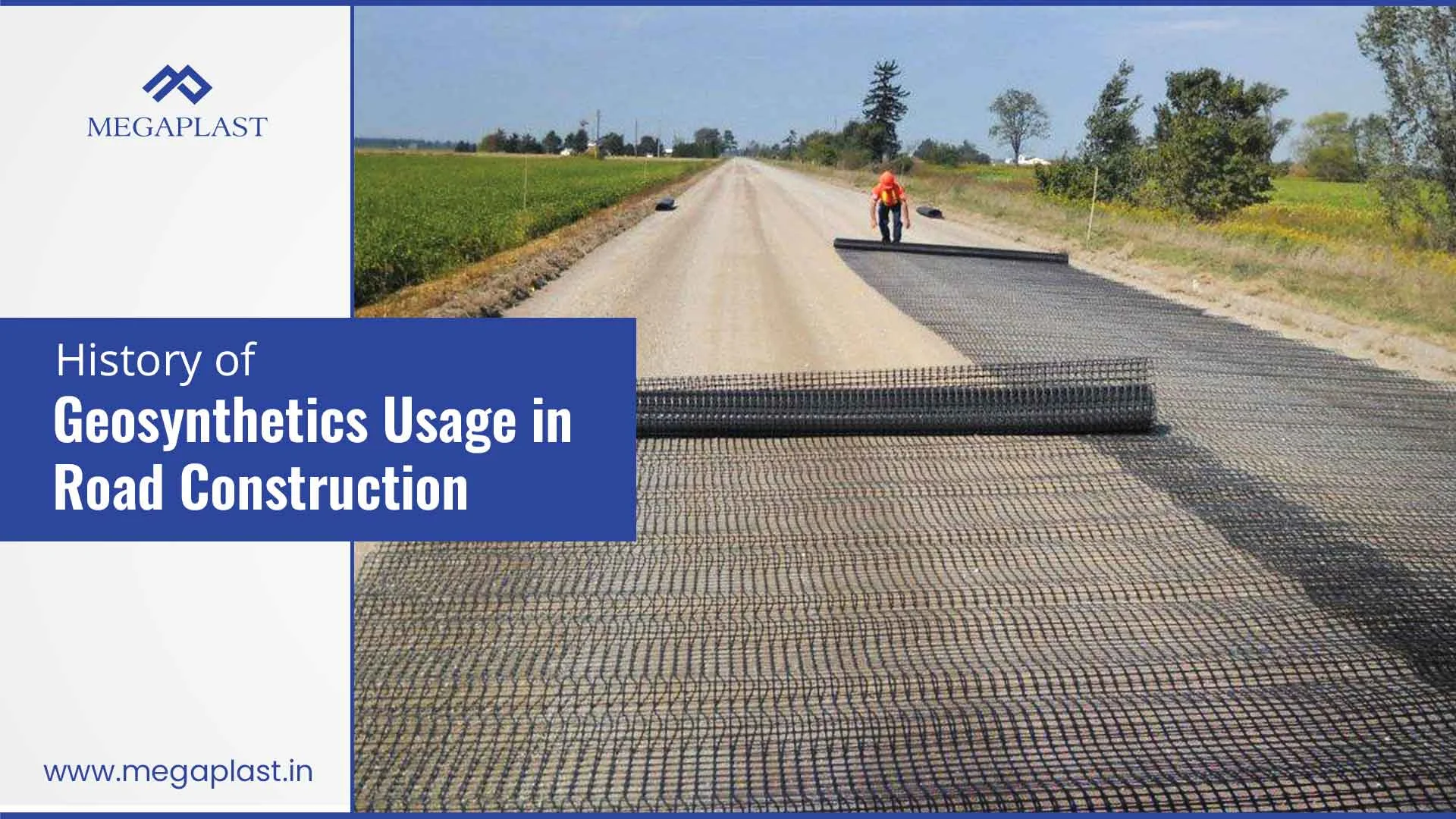
- Geogrids: Open, grid-like polymer sheets providing
tensile reinforcement to spread loads and reduce rutting on weak
subgrades.
- Geocomposites and Geonets: Engineered combinations
of materials for drainage and separation where higher flow or
structural drainage paths are needed.
- Geocells: Three-dimensional honeycomb structures
that confine infill, useful for slope protection and weak foundation
support.
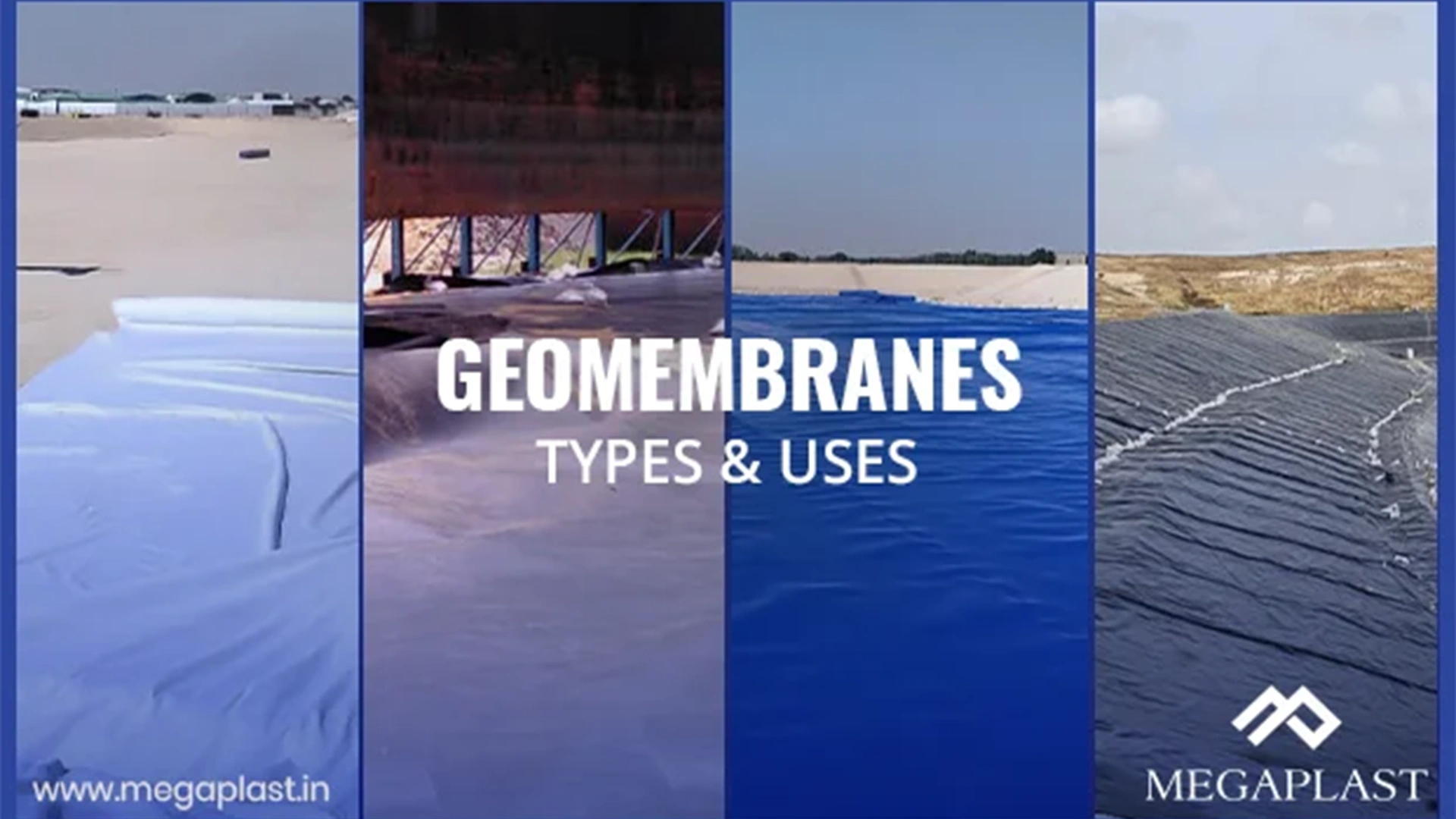
- Geomembranes: Impermeable polymer liners used where
containment or a moisture barrier is required, for example beneath
sections exposed to contaminated groundwater or in special drainage
lining.
Megaplast’s
geomembrane
product family — including the
MegaLiners
range — addresses applications that demand low permeability and
chemical and UV stability.
When to Choose Liners or Membranes in Pavements
Use impermeable liners in road projects when water ingress, containment
of contaminants, or separation from aggressive subgrade chemistry could
threaten pavement performance. Typical situations include:
- Roads over organic or highly compressible soils:
Where capillary rise or seepage must be controlled.
- Road sections adjacent to industrial sites or waste
containment: Where leachate or contaminants may be present.
- Built-up drainage channels or culverts: Where an
impermeable lining is required to protect the structural sub-base.
For these applications, consider the polymer type and mechanical
properties. For example, Megaplast’s
HDPE liners
are suited where high strength and puncture resistance are priorities,
while
LLDPE liners
provide greater flexibility and elongation for dynamic conditions such
as moving subgrades and floating or flexible covers.
Design and Procurement Considerations for Engineers and Buyers
- Define performance objectives: Identify whether the
project requires separation, filtration, reinforcement, drainage,
or containment. Document the soil profile, groundwater conditions,
traffic loading, and any chemical exposures.
- Specify material type and properties: Consider
tensile strength, elongation, puncture resistance, permeability for
geotextiles, and chemical and UV stability for geomembranes.
- Check supplier capabilities: Evaluate production
capacity, quality control, on-site support, and testing. Megaplast’s
manufacturing footprint and R&D capabilities — 19+ years in
business, 400+ professionals, 24,000 MT annual capacity, a
300,000 sq. ft. facility, and a GAI-LAP- and NABL-certified
Innovation Centre — can support specification review and bespoke
product discussions.
- Installation and seaming: Proper installation,
trimming, trenching, and seaming or welding procedures are critical.
Poor installation can cause more performance loss than small
differences in material specification. Require qualified installers
and on-site quality checks.
- Warranty and lifecycle costs: Evaluate whole-life
costs, including materials, installation, and potential maintenance
savings, rather than initial material cost alone. Request documented
field performance or manufacturer case histories relevant to similar
soils and loading.
Practical Tips for Common Road Scenarios
- Weak subgrades: Use a separation geotextile
combined with a reinforcement geogrid to reduce the required
aggregate thickness.
- Poor drainage: Install geonets or geocomposites
under the subbase to provide controlled drainage paths and prevent
saturation.
- Contaminated or high-moisture sites: Specify an
impermeable geomembrane layer and ensure secure overlap or seaming
and protection against puncture, such as a geotextile cushion.
See Megaplast’s
Industrial Liners
page for liner-related applications.
Conclusion
Geosynthetics are a mature set of technologies that, when selected and
installed correctly, improve pavement performance, extend service life,
and reduce maintenance costs. Successful projects combine sound
geotechnical assessment, clear performance specifications, verified
material testing, and rigorous installation quality control.
Talk to Megaplast
Explore project-specific options for geomembranes and liners like
MegaLiners
or request technical data tailored to your application.
Request a quote
or
contact Megaplast
.
For direct assistance, you can also email
info@mega-group.in
or connect with us on WhatsApp at +91 83569 01123.