Geomembrane Liners for Water Resource Projects: Applications and Material Selection
Effective containment and lining are essential for protecting water resources and managing water-related infrastructure. This article summarizes how geomembrane liners are used in reservoirs, canals, ponds, leachate collection systems and water-treatment applications, and it outlines practical criteria for selecting the right material for your project.
Why use geomembrane liners for water projects
Geomembrane liners act as low-permeability barriers to prevent seepage, protect groundwater, reduce contamination risk, and limit erosion in water storage and treatment systems. They are commonly specified where leakage control and durability are priorities, and they can offer a cost-effective alternative to engineered earth solutions when combined with good installation practices.
Material options and how they differ
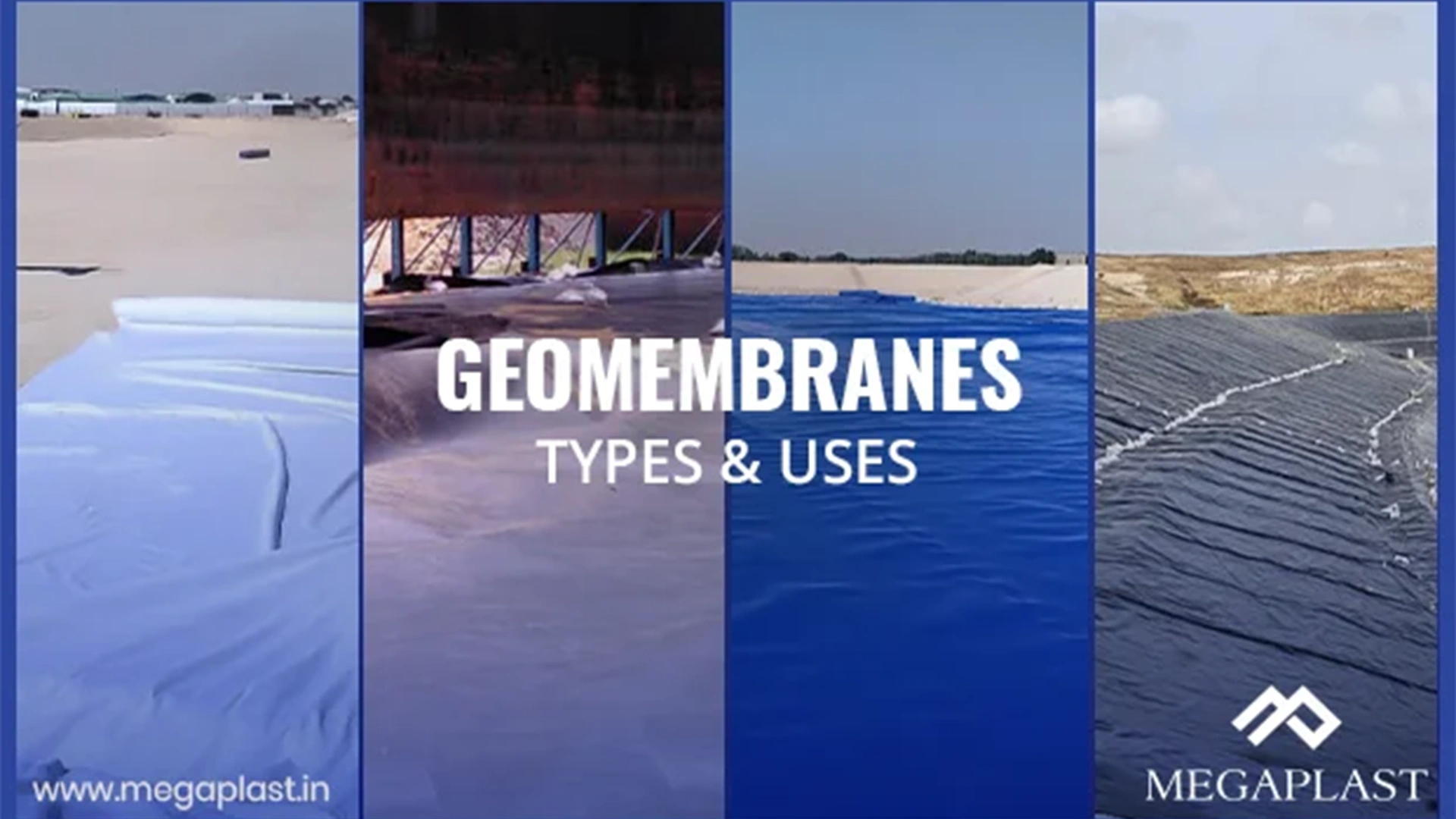
HDPE and Mega HDPE Liners
High-density polyethylene (HDPE) is widely used where chemical resistance and long-term stability are required. Megaplast’s
MegaLiners family includes specific HDPE options; see the
HDPE Liners page for product variants such as Mega Diamond, Mega Platinum and Mega Gold. HDPE offers high chemical resistance and low permeability, and textured surfaces can improve interface stability on slopes.
LLDPE for flexibility and dynamic conditions
Linear low-density polyethylene (LLDPE) provides greater flexibility and elongation than HDPE, making it appropriate for applications with differential settlement, dynamic loading, or where folding and conformability are needed. Megaplast’s
LLDPE Liners are positioned for these conditions and for applications such as landfill caps, leach pads, floating covers and certain containment systems.
Pond liners and agricultural water retention
Megaplast offers dedicated
Pond Liners manufactured from high-quality PE. These liners are designed for fish ponds, agricultural ponds, irrigation reservoirs and water storage tanks and are described on the product page as 0.5–2 mm, 100% virgin PE, with low permeability and high UV stabilization. For aquaculture or irrigation, select a liner with appropriate UV protection and resistance to the local environment.
Common water-related applications
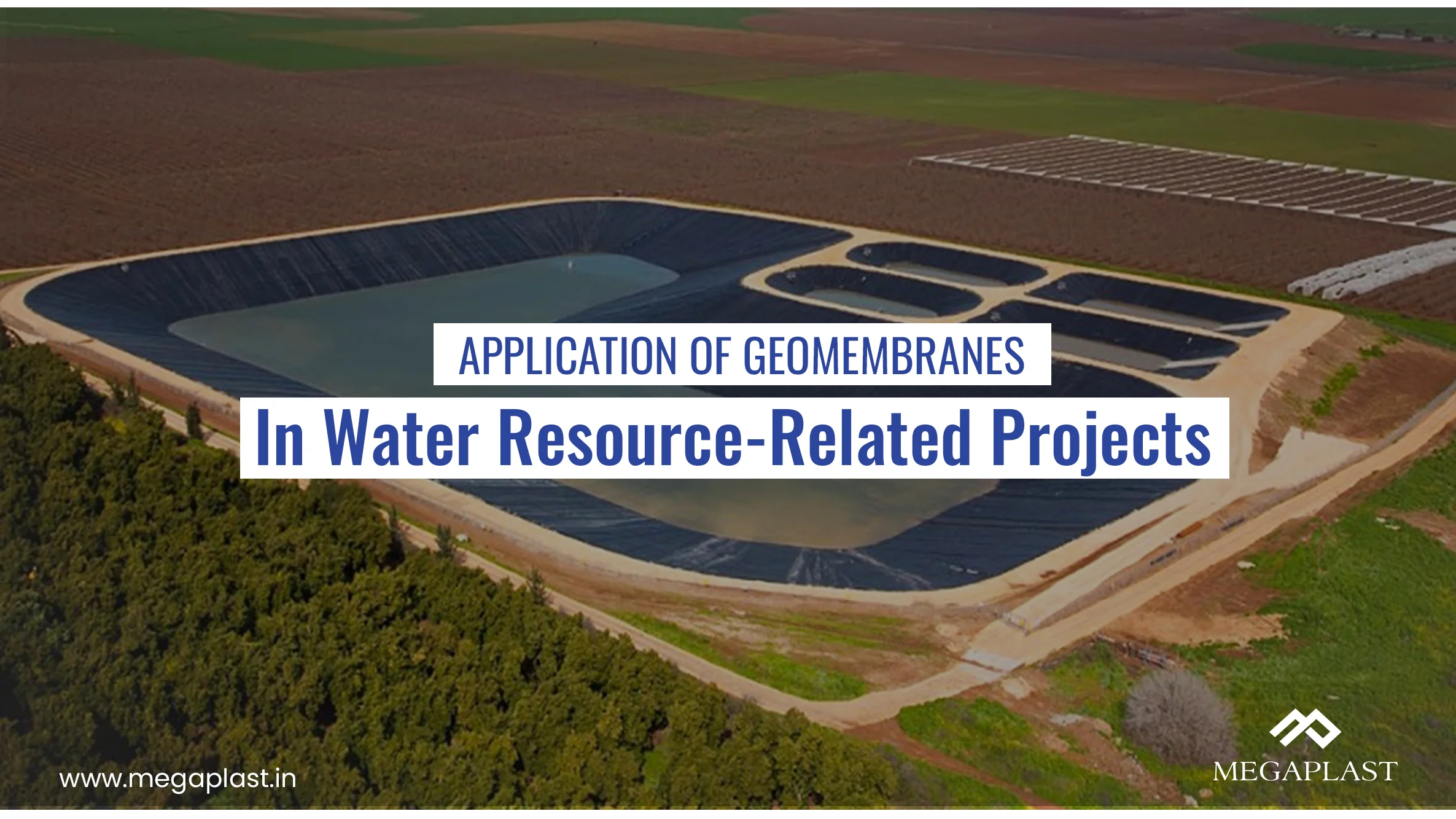
- Reservoir and dam liners to reduce seepage and protect structural elements
- Canal and irrigation channel liners to reduce water loss and limit erosion
- Pond liners for fish farming, irrigation and water storage
- Leachate collection lagoons adjacent to waste management sites, where chemical resistance is a priority
- Components in water-treatment systems and constructed wetlands to prevent contaminants from reaching groundwater
- Floating covers and aquaculture applications where flexibility and weldability are important
For product-level options, see the Megaplast
Geomembranes product section.
Key selection criteria for engineers and procurement teams
-
Project conditions
Describe hydraulic head, expected chemical exposure, temperature range and whether the liner must accommodate movement or settlement.
-
Material compatibility
Choose HDPE for higher chemical resistance; choose LLDPE for flexibility and higher elongation.
-
Surface texture
Smooth sheets are suitable for many reservoirs; textured liners can improve friction on slopes and reduce slippage.
-
Thickness and mechanical properties
Select thickness based on design loads, puncture risk and installation method. Consult the manufacturer for recommended gauges for specific applications.
-
UV and environmental exposure
Use UV-stabilized formulations and consider protective cover or ballast where long-term sunlight exposure is expected.
-
Seaming and quality assurance
Specify welding procedures, destructive and non-destructive seam testing, and on-site quality control to ensure integrity after installation.
-
Installation and maintenance
Proper subgrade preparation, protection layers, and post-installation inspection extend service life and reduce repair costs.
Communicate these details to the manufacturer or supplier when requesting specifications so they can recommend the most appropriate liner system.
Installation and quality considerations
Successful performance depends on careful site preparation and quality-controlled installation. Typical best practices include thorough subgrade preparation to remove sharp objects, use of geotextile protection layers where needed, certified welders for seam work, and post-installation testing of seams and anchorages. Where redress or repairs are anticipated, plan for access and monitoring to detect early signs of damage.
Why consider Megaplast for geomembrane solutions
Megaplast India manufactures PE solutions across industrial and agricultural applications and has product lines tailored for geomembrane use. The company has 19+ years of experience, a large manufacturing footprint and an Innovation Centre with GAI-LAP and NABL accreditation. Explore Megaplast’s geomembrane offerings on the
MegaLiners and overall
Geomembranes pages, as well as specific
HDPE Liners,
LLDPE Liners and
Pond Liners.
Conclusion
Geomembrane liners are a proven option for managing seepage, protecting water resources and enabling containment in a wide range of water-related projects. Selecting the right polymer, texture and thickness—paired with quality installation and testing—will help ensure long-term performance. Engage your liner supplier early with project-specific data so they can recommend the best material and installation approach.
Talk to Megaplast
For a project assessment or specification support,
request a quote or
contact Megaplast to discuss suitable MegaLiners or pond liners for your site. You can also reach the team at
info@mega-group.in or connect with us on WhatsApp at +91 83569 01123 for technical queries and next steps.