Geomembranes in the Oil & Gas Industry: Applications, Selection and Installation Guide
Geomembranes are widely used across the oil and gas sector to provide impermeable barriers for containment, environmental protection, and site remediation. These engineered liners help control the movement of liquids, slurries, and potentially contaminated materials, reducing the risk of migration into surrounding soil and groundwater.
This guide explains common geomembrane applications in oil and gas operations, provides practical guidance for material selection and installation, and outlines key procurement considerations for engineers, contractors, and buyers specifying geomembranes for drilling pads, impoundments, secondary containment, and decommissioning projects.
Why Geomembranes Are Used in Oil & Gas
Oil and gas operations involve fluids, chemicals, hydrocarbons, drilling waste, and other materials that require controlled containment. Geomembranes can form a reliable low-permeability barrier when properly selected, designed, installed, and maintained.
Impermeable Containment
Geomembranes provide impermeable containment for liquids and slurries, helping protect underlying soil and groundwater from potential contamination.
Secondary Containment
Liners can create secondary containment systems beneath tanks, process equipment, storage areas, and operational pads to reduce the consequences of leaks and spills.
Reclamation and Remediation
During site remediation, geomembranes can help isolate contaminated soils and materials during removal, treatment, disposal, or capping activities.
Multi-Layer Containment Systems
Geomembranes can be integrated with geotextiles, geocomposites, and drainage layers to improve puncture resistance, filtration, drainage, and overall containment performance.
Common Geomembrane Applications in Oil & Gas
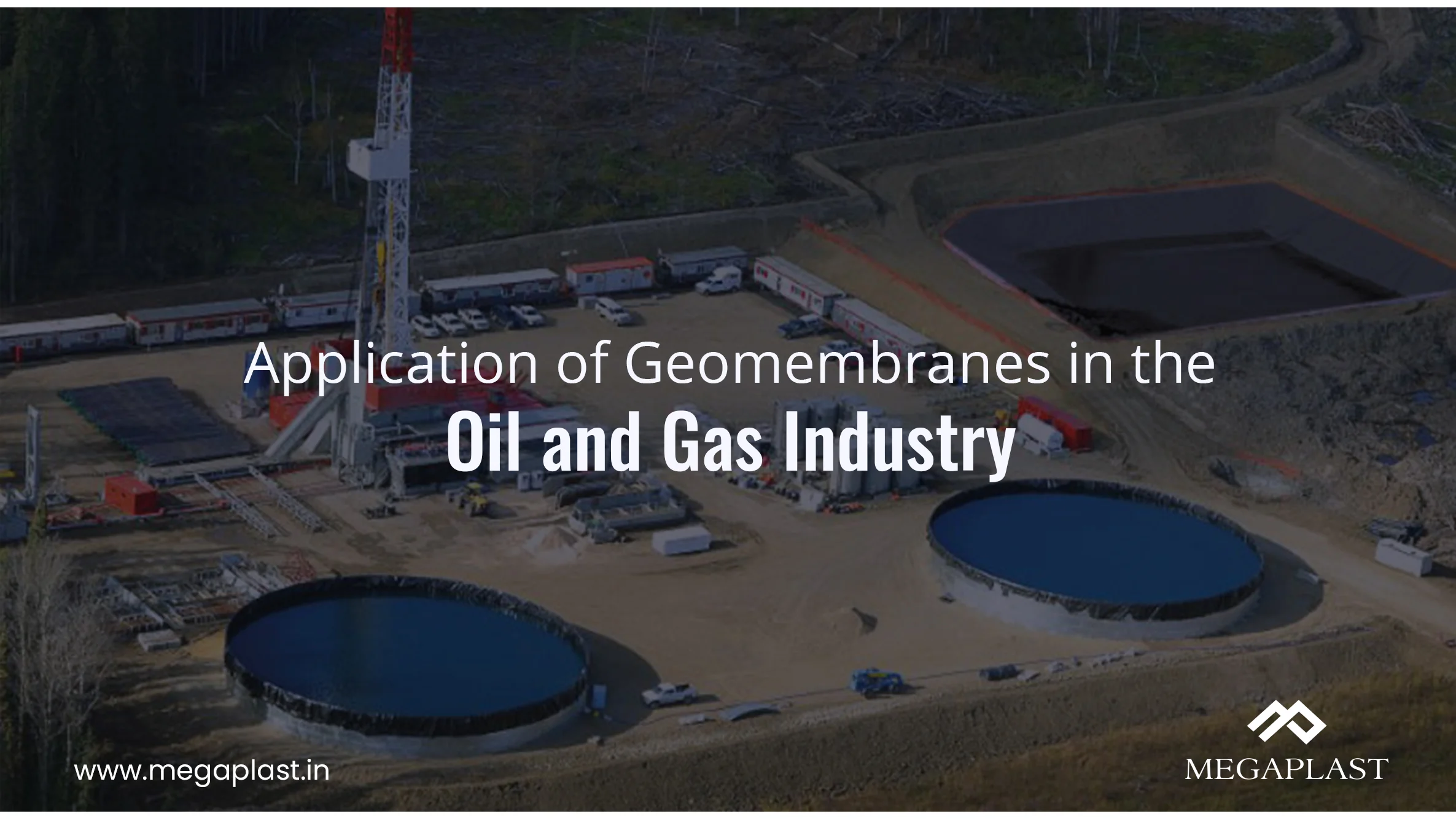
Geomembranes can be used across multiple stages of oil and gas operations, from drilling and fluid management through remediation and decommissioning.
Impoundments, Ponds and Treatment Basins
Geomembrane-lined basins can be used for water storage, produced water, treatment lagoons, and other fluid-management applications. The liner acts as a barrier between the stored material and the underlying ground.
Secondary Containment for Tank Farms
Geomembranes can be installed beneath tank farms, mobile tanks, process equipment, and storage areas to provide secondary containment against accidental leaks or spills.
Drilling Pads and Rig Areas
Temporary or permanent geomembrane systems can be used across drilling pads and rig areas to help contain spills, drilling fluids, cuttings, and other materials that could otherwise migrate into the surrounding environment.
Hydraulic Fracturing Sites
Geomembrane liners can be used for hydraulic fracturing site containment and flowback management. Properly designed liner systems help reduce the potential migration of process fluids into the underlying ground.
Waste Management and Landfill Areas
Geomembranes can form part of containment systems for on-site disposal facilities, landfill covers, leachate collection systems, and other waste-management areas associated with industrial operations.
Decommissioning and Site Remediation
During decommissioning and environmental remediation, geomembranes can provide temporary or permanent containment while contaminated materials are removed, treated, transported, or disposed of.
Megaplast Geomembrane Solutions for Oil & Gas Applications
Megaplast manufactures a range of polyethylene geomembrane solutions for containment, environmental protection, infrastructure, mining, water management, and industrial applications.
For site-scale lining projects, explore the Megaplast Geomembranes product range and specific product families such as MegaLiners.
Where project conditions demand higher stiffness, dimensional stability, puncture resistance, and chemical resistance, HDPE liners can be considered.
For applications requiring greater flexibility and elongation in dynamic or settlement-prone areas, the LLDPE liners family provides an alternative solution.
For water storage and pond applications associated with agricultural or site water-management requirements, review the Pond Liners range.
Choosing Between HDPE and LLDPE Geomembranes
The selection between HDPE and LLDPE should be based on the project environment, mechanical requirements, chemical exposure, substrate conditions, installation method, and expected ground movement.
HDPE Liners
Typical strengths: HDPE geomembranes provide high tensile stiffness, puncture resistance, tear resistance, dimensional stability, and chemical resistance. They are commonly selected for applications where long-term structural and containment performance is important.
Common uses: HDPE liners can be considered for tank pads, permanent impoundments, industrial containment systems, landfill liners, and other applications where dimensional stability and chemical durability are required.
LLDPE Liners
Typical strengths: LLDPE geomembranes generally offer greater flexibility and elongation than HDPE. This makes them suitable for applications involving ground movement, settlement, thermal cycling, folding, or profiling around structures.
Common uses: LLDPE liners can be used for landfill caps, leach pads, floating covers, containment areas, and sites where settlement or substrate movement may occur.
Textured and Surface Variants
Textured geomembranes can improve interface friction between the liner and adjacent materials such as soil, geotextiles, ballast, or other containment layers. Smooth geomembranes can provide advantages during welding, handling, and inspection.
Megaplast MegaLiners are available in smooth, single-textured, and double-textured options to suit different installation and performance requirements.
Geomembrane Design and Installation Considerations
The performance of a geomembrane containment system depends not only on the liner itself but also on subgrade preparation, welding quality, anchoring, chemical compatibility, and the overall system design.
Subgrade Preparation
The subgrade should be properly prepared before liner deployment. Sharp objects, debris, protrusions, and other materials that could puncture the geomembrane should be removed. The surface should be suitably graded and compacted, with a geotextile cushion used where required to reduce puncture risk.
Seaming and Welding
Qualified fusion welding or extrusion welding is essential for creating reliable geomembrane seams. Welding should follow documented procedures and be performed by trained or certified operators using equipment appropriate for the geomembrane material and site conditions.
Chemical Compatibility
The compatibility of the geomembrane polymer with site chemicals should be evaluated before material selection. Oils, hydrocarbons, solvents, acids, alkalis, and other chemicals can affect polymer performance depending on concentration, temperature, and exposure duration. Manufacturer technical data and compatibility testing should be reviewed where necessary.
Ballast and Anchoring
Appropriate anchoring should be selected according to site conditions. Anchor trenches, ballast, mechanical anchors, or other systems may be required to manage wind uplift, hydrostatic forces, thermal movement, and operational loading.
Multi-Layer Systems
Geomembranes can be combined with geotextiles, geocomposites, drainage layers, and other geosynthetics to achieve the required hydraulic and mechanical performance. The complete system should be designed rather than treating the geomembrane as an isolated component.
Inspection, Testing and Maintenance
Quality assurance and quality control should continue from material manufacturing through field installation and post-installation inspection. Proper testing helps identify potential defects before the containment system is placed into service.
Factory and Field Testing
Project documentation should include material certificates, thickness verification, relevant product test results, and field weld testing. Peel and shear tests can be used during installation to assess seam quality and welding performance.
Post-Installation Inspection
Completed geomembrane systems should undergo visual inspection and appropriate seam testing. Destructive weld testing and, where applicable, non-destructive survey methods can be used to verify seam integrity and identify potential defects.
Routine Maintenance
Containment surfaces should be kept clear of debris and inspected following severe weather, maintenance activity, or heavy equipment use. Any punctures, cuts, or other damage should be repaired promptly using approved repair procedures and compatible geomembrane material.
Procurement Checklist for Engineers and Buyers
When specifying a geomembrane for an oil and gas project, procurement teams should evaluate both the material specification and the manufacturer’s ability to support the complete project lifecycle.
| Procurement Item | What to Consider |
|---|---|
| Technical Data Sheet | Confirm polymer type, such as HDPE or LLDPE, thickness range, surface texture, mechanical properties, and relevant standards or test requirements. |
| Chemical Compatibility | Provide the supplier with information on site chemicals, hydrocarbons, process fluids, concentrations, and operating temperatures so material compatibility can be assessed. |
| Installation Support | Confirm availability of technical support, qualified or certified welders, installation guidance, welding procedures, and documented QA/QC processes. |
| Supply Capability | Verify manufacturing capacity, lead times, panel or roll dimensions, packaging, logistics capability, and the ability to supply material for large-scale projects. |
| Warranty and After-Sales Support | Clarify warranty terms, repair procedures, technical support, spare material requirements, and support available during maintenance or emergency repairs. |
Why Consider Megaplast for Oil & Gas Geomembrane Projects?
Megaplast has more than 19 years of experience in polyethylene film manufacturing and operates with a manufacturing footprint of approximately 300,000 sq. ft. and an annual production capacity of approximately 24,000 metric tonnes.
A team of 400+ professionals supports manufacturing, product development, quality, and customer requirements across domestic and international markets. Megaplast supplies products to customers in more than 30 countries.
The company’s Innovation Centre supports product development and testing, including advanced multi-layer extrusion capabilities. Its testing and quality infrastructure includes GAI-LAP- and NABL-related laboratory capabilities, supporting product development, characterization, and quality assurance.
For geomembrane projects, Megaplast can support customers with product selection, application requirements, customized specifications, and supply of PE liner solutions for demanding containment environments.
Key Factors When Selecting an Oil & Gas Geomembrane
A suitable geomembrane should be selected based on the complete project environment rather than polymer type alone. Key considerations include:
Fluid and Chemical Exposure
Identify the liquids, hydrocarbons, chemicals, and waste materials that the liner will contain and evaluate their compatibility with the selected polymer.
Mechanical Loading
Consider equipment movement, traffic, ballast, substrate conditions, puncture risks, and other mechanical loads that may affect the liner.
Ground Movement and Settlement
Sites exposed to settlement, thermal cycling, or uneven ground movement may benefit from geomembranes with greater flexibility and elongation.
Temperature and Environmental Conditions
Operating temperatures, solar exposure, wind conditions, rainfall, and other environmental factors should be considered during material selection and installation planning.
Installation Conditions
The selected liner should be compatible with the project’s deployment, welding, anchoring, inspection, and repair requirements.
Long-Term Performance
Material thickness, polymer type, formulation, testing, welding quality, and system design should all be considered when evaluating long-term containment performance and lifecycle cost.
Conclusion
Geomembranes are an important component of containment and environmental protection systems across the oil and gas sector. They can be used for drilling pads, impoundments, secondary containment, hydraulic fracturing sites, waste-management areas, and remediation and decommissioning projects.
Choosing the right geomembrane requires balancing containment performance, chemical compatibility, mechanical requirements, site conditions, installation methodology, and long-term service expectations. HDPE and LLDPE each offer distinct performance characteristics, while surface texture and multi-layer system design can further improve application-specific performance.
Following appropriate subgrade preparation, qualified welding procedures, inspection, testing, and maintenance practices can help reduce leakage risks and improve the long-term reliability of containment systems.
Talk to Megaplast
Megaplast can support geomembrane specification review, application assessment, product selection, and supply for oil and gas containment and environmental protection projects.
Explore the Megaplast Geomembranes range or review specific MegaLiners solutions for HDPE and LLDPE applications.
To discuss your project, request a quote or contact Megaplast.
You can also reach the team at info@mega-group.in or +connect with us on WhatsApp at +91 83569 01123 for assistance.