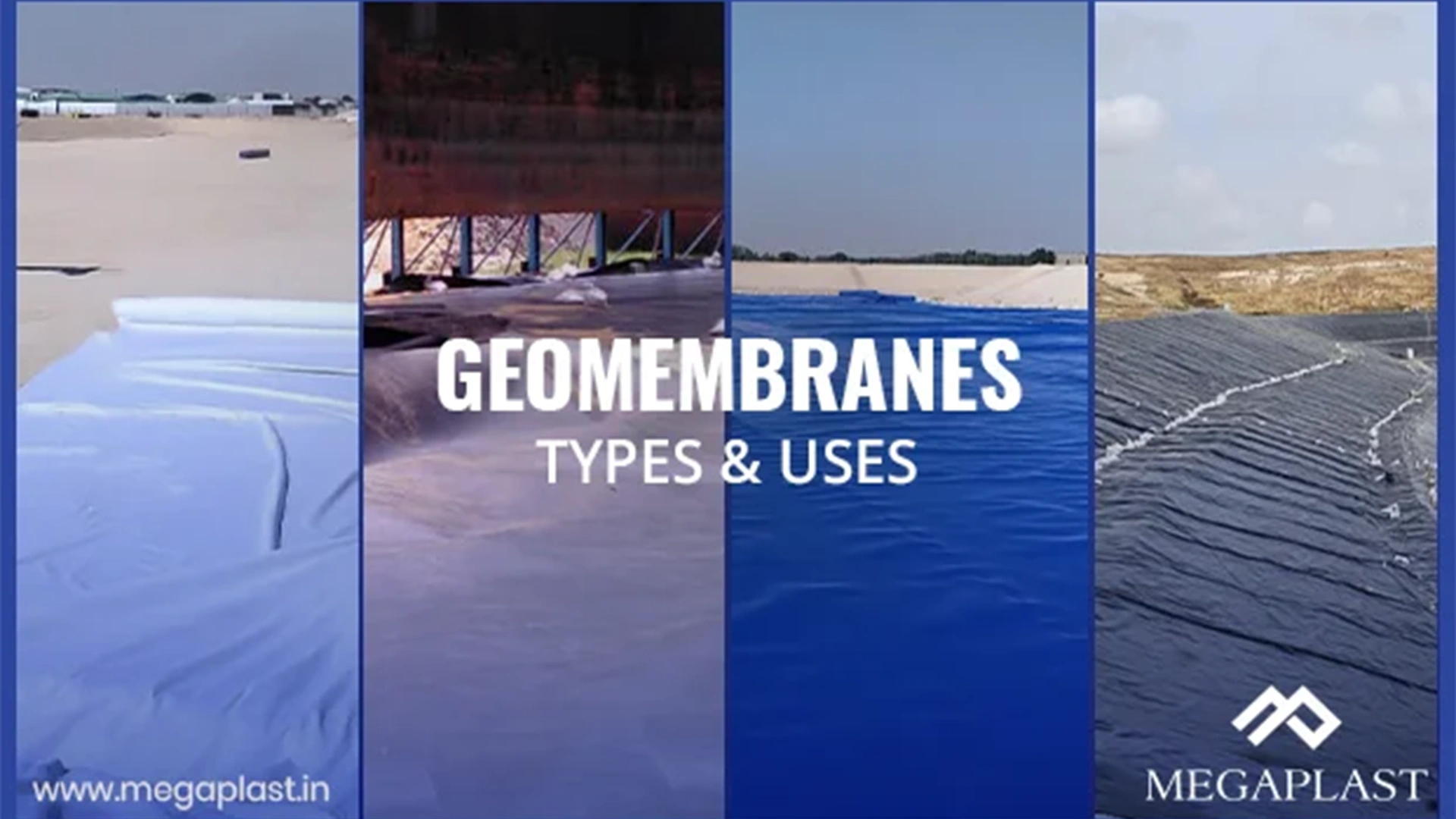
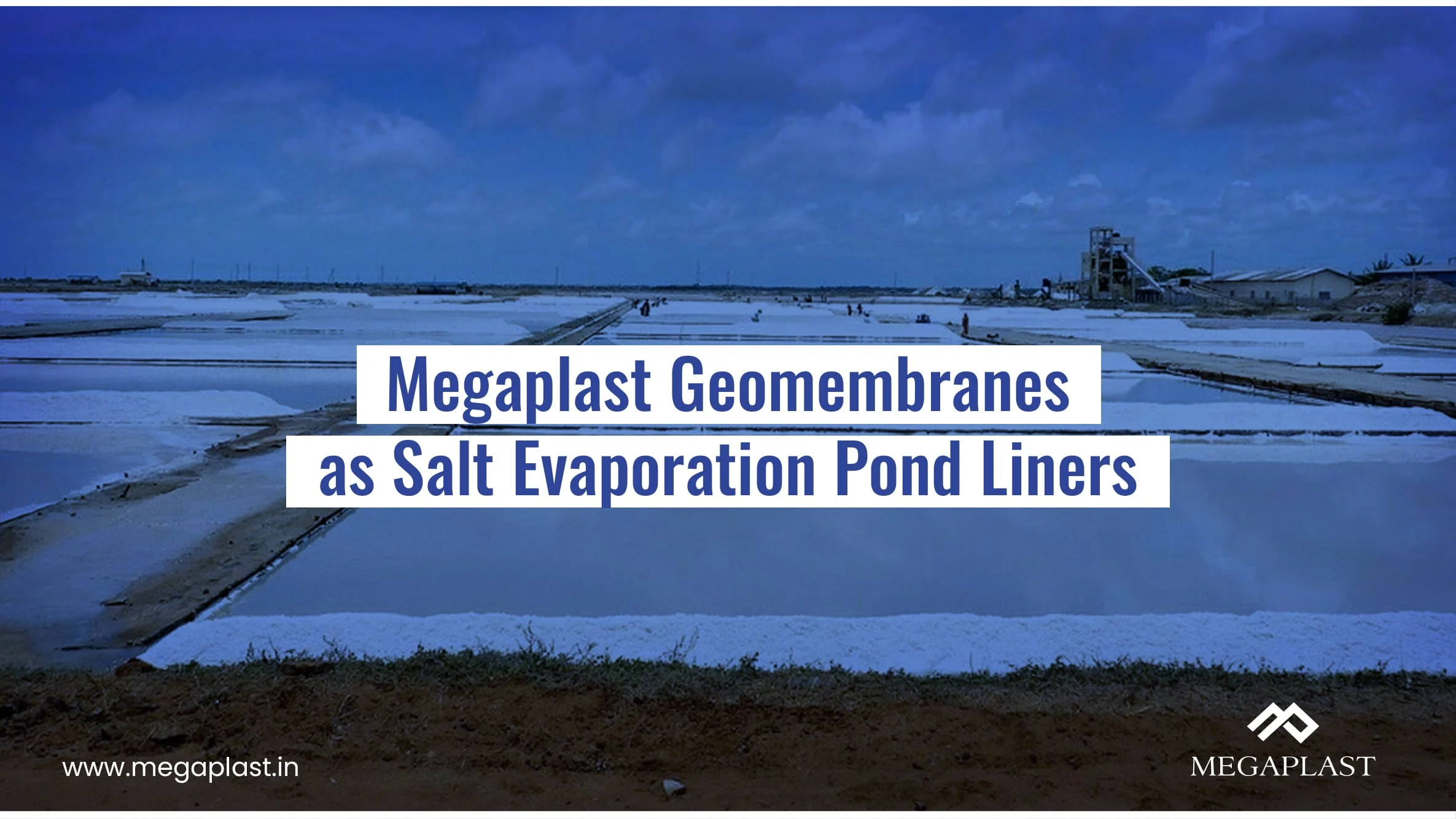
Selecting the Right Geomembrane for Salt Evaporation Ponds
Salt evaporation ponds concentrate seawater or brine to produce salt. Choosing the right geomembrane liner reduces seepage, limits contamination, and helps maintain consistent salt concentrations. This guide explains how Megaplast geomembranes and pond liners suit salt‑making applications and outlines key design, installation, and maintenance considerations for engineers, procurement teams, and plant operators.
Why an engineered liner matters for salt ponds
A properly selected geomembrane provides a low-permeability barrier that prevents brine loss to the subsoil and avoids ground contamination. For salt production, liners must also tolerate sustained UV exposure, abrasive salt crystals, and thermal cycling. Minimizing seepage improves evaporation efficiency and helps maintain product quality by reducing soil-derived impurities.Megaplast products suited to salt evaporation ponds
- Megaplast offers geomembrane solutions under its MegaLiners range. These are engineered to deliver low permeability along with chemical and UV stability, and enhanced tear and puncture resistance.
- For stiffer, low‑permeability installations, consider the HDPE Liners (Mega Diamond, Mega Platinum, Mega Gold) that are commonly used where dimensional stability and long‑term UV resistance are priorities.
- Where flexibility and elongation are needed (for dynamic or irregular bases), LLDPE Liners offer better conformability.
- Megaplast’s Pond Liners are described as high-quality PE in the 0.5–2 mm range, manufactured from 100% virgin PE with low permeability and high UV stabilization—features directly relevant to salt pond lining.
Design and installation best practices
Good liner performance depends as much on design and installation as on material selection. Key considerations:- Subgrade preparation – remove sharp stones and debris, level the surface, and compact to provide a uniform support for the liner.
- Layout and roll selection – orient panels to minimize seams in critical areas; select roll widths and thicknesses based on site access and handling requirements.
- Seaming and welding – use qualified welding technicians and appropriate methods (hot wedge, extrusion welding) to produce continuous, leak‑resistant seams. Perform nondestructive seam testing where feasible.
- Anchor and transition details – design secure perimeter anchors and transitions at inlet/outlet structures to resist uplift and hydraulic forces.
- Protection layer – where abrasion from salt crystals or handling is likely, use a protective cover (e.g., sand or geotextile) over the liner in exposed areas to reduce puncture risk.
- Allowance for thermal movement – provide expansion/contraction details and avoid over‑stressing seams during temperature swings.
Operation and maintenance
Routine inspections extend liner life and reduce operational risk:- Inspect seams, anchors, and inlet/outlet details regularly for signs of damage or loosening.
- Remove sharp deposits and debris promptly to lower puncture risk.
- Repair minor damage immediately using manufacturer‑recommended patching and welding procedures; retain a record of repairs.
- Monitor pond water levels and freeboard to prevent overtopping and edge erosion.
Choosing the right specification
Specify the lining system based on:- Exposure conditions (UV, wind, salt abrasion)
- Subgrade abrasivity and puncture risk
- Required service life and replacement strategy
- Installation access and available contractor expertise