Pond Liners for Aquaculture: Benefits, Materials and Selection Guide
Aquaculture relies on stable water quality and controlled environments.
A properly specified pond liner protects water resources, reduces
contamination risk, and simplifies management—helping farms and hatcheries
maintain healthy stock while lowering operating risks.
What Pond Liners Do for Aquaculture
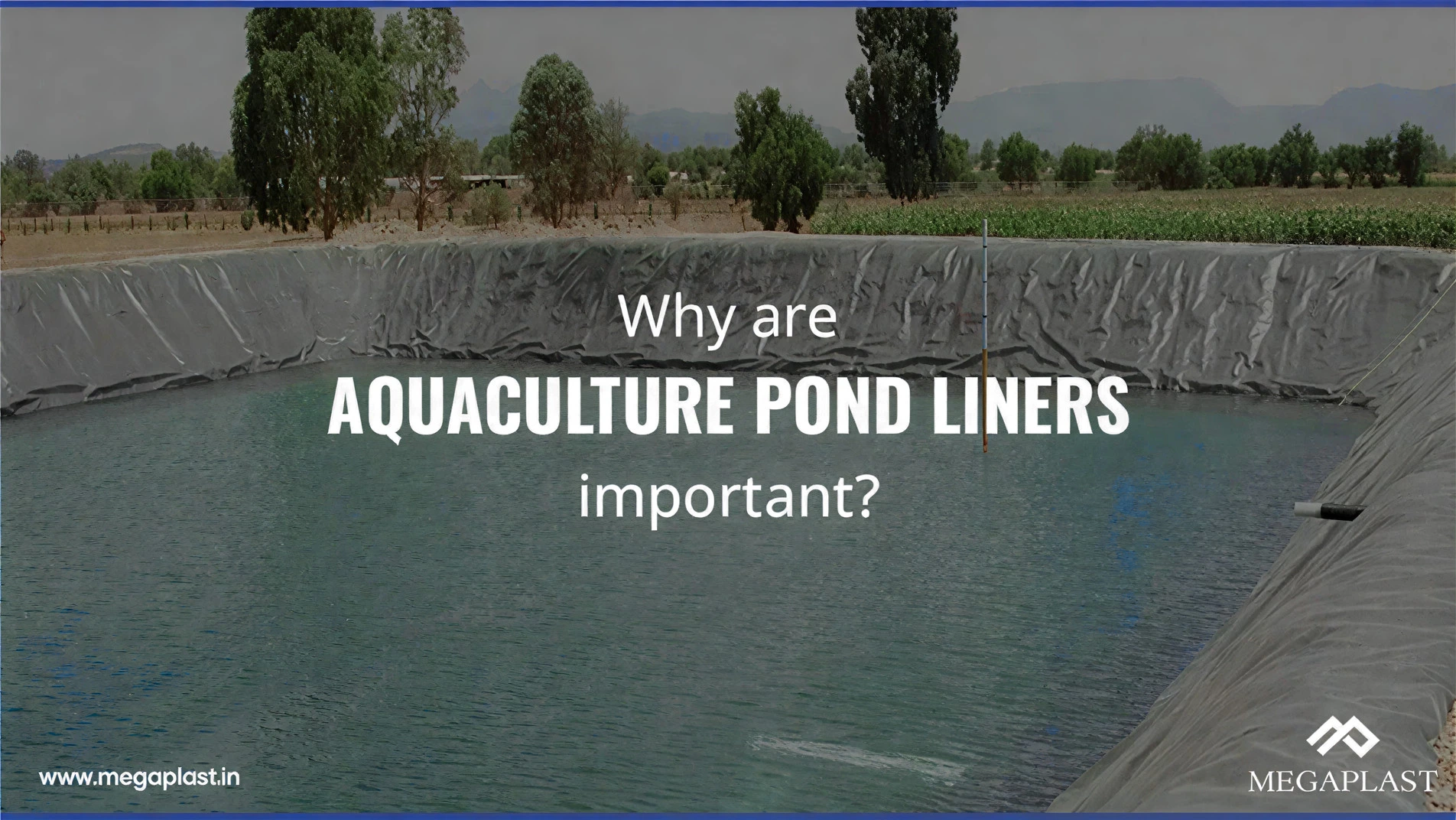
Pond liners form an impermeable barrier between water and the ground.
Their primary benefits for aquaculture operations include:
- Water Conservation:
Minimising seepage helps conserve water and reduces the frequency
of refill cycles. - Contamination Control:
Liners help prevent contamination from soil-borne pollutants,
agrochemical residues, or seepage from nearby operations. - More Consistent Thermal Conditions:
By reducing heat exchange with surrounding soils, pond liners can
support more consistent water temperatures. - UV and Algae Management:
UV-stabilised liners offer resistance to sunlight-related degradation,
which can extend service life and help limit excessive algae growth.
Pond liners are used across hatchery trays, tanks, and earthen ponds.
They can also simplify cleaning and disease-management practices on
the farm.
Materials and Megaplast Pond Liner Options
Megaplast supplies geomembrane solutions suited to aquaculture needs.
Key product categories to consider include:
- MegaLiners:
Megaplast positions these as technically superior impermeable liners
available in smooth, single-textured, and double-textured variants.
Learn more about
MegaLiners
. - HDPE Liners:
High-density polyethylene liners are commonly selected where
chemical resistance and low permeability are priorities. Megaplast’s
HDPE range, including Mega Diamond, Mega Platinum, and Mega Gold,
is described under the
HDPE Liners
section. - LLDPE Liners:
Linear low-density polyethylene offers greater flexibility and
elongation for installations subject to movement or settlement.
Explore Megaplast’s
LLDPE Liners
for flexible-liner applications. - Pond Liners (Agricultural):
Megaplast’s pond liners are available in the 0.5–2 mm range,
made from 100% virgin PE, with low permeability and high UV
stabilisation. They are suitable for fish ponds, agricultural
ponds, water storage tanks, and irrigation reservoirs.
Product details are available
here
.
For an overview of geomembrane applications and considerations,
see the Megaplast
Geomembranes
page.
Choosing Between HDPE and LLDPE for Ponds
- Choose HDPE:
HDPE is suitable when long-term chemical resistance and very low
permeability are key priorities. HDPE is typically stiffer and
well suited to flatter, well-supported installations. - Choose LLDPE:
LLDPE is suitable when installation requires higher flexibility
and elongation, such as on uneven substrates, steeper slopes,
or floating covers.
Selection should be driven by site conditions, expected stresses such
as traffic, anchors, and sediment, and the specific water or chemical
environment rather than brand claims alone.
Practical Pond Liner Selection and Installation Checklist
When specifying a liner for aquaculture, consider these practical factors:
- Thickness:
Verify the required grade for your application. Megaplast offers
pond liners in the 0.5–2 mm range. Thicker liners can provide
greater puncture resistance in high-risk sites. - Jointing and Seams:
Ensure seams are produced and field-welded by experienced teams
using compatible processes and inspected for integrity after
installation. - Anchoring and Bedding:
Proper subgrade preparation, including compaction, removal of
sharp objects, and use of geotextiles where needed, reduces
puncture risk and improves liner longevity. - UV Exposure:
Choose UV-stabilised materials for exposed ponds. Surface treatments,
shading, or floating covers can also be considered to limit algae growth. - Chemical Compatibility:
Confirm that the liner material is suitable for any dissolved
substances present, such as salts or disinfectants. Request
manufacturer guidance or sample testing when unsure. - Maintenance and Monitoring:
Schedule routine inspections for punctures, seam integrity, and
signs of stress. Early repairs can reduce downtime and stock risk.
Installation and Lifecycle Considerations
Long service life depends on correct installation and proactive maintenance.
Engage experienced installers, verify on-site welding quality, and document
testing, including visual inspection and destructive or non-destructive seam
tests where applicable.
Properly stored and handled geomembranes retain their properties. Follow
supplier recommendations for storage, unfolding, handling, and welding
temperatures to help maintain material performance throughout installation.
Conclusion
High-quality pond liners form the foundation of reliable aquaculture by
protecting water resources, preventing contamination, and simplifying
farm operations.
Match material choice, including HDPE versus LLDPE, thickness, and
installation practices to site conditions and operational needs to
achieve predictable performance and lower lifecycle costs.
Talk to Megaplast
For product guidance or to specify a pond liner for your project,
request a quote
or
contact Megaplast.
You can reference Megaplast’s pond liner range when you reach out,
or email
info@mega-group.in
to discuss suitability, sample requests, and delivery timelines.
Have questions? We are here to help! Reach out via email at info@mega-group.in, connect on WhatsApp at +91 83569 01123, or call our team at +91 22 6106 6000.