Geomembranes for Petrochemical Secondary Containment: HDPE vs LLDPE
Introduction
Secondary containment is a fundamental safeguard at petrochemical sites:
it protects people, assets, and the environment by providing a backup
barrier should primary containment fail. Geomembranes are a widely used
lining option for secondary containment because they form low-permeability
barriers that limit the spread of hazardous liquids when correctly
specified and installed.
Why Secondary Containment Matters in Petrochemical Operations
A robust secondary containment system reduces risk from spills, limits
remediation scope, and supports regulatory and stakeholder expectations.
For engineering and procurement teams, the right lining solution should
balance chemical resistance, mechanical durability, and installability
for the project’s site conditions and long-term maintenance plan.
Geomembrane Options: HDPE and LLDPE
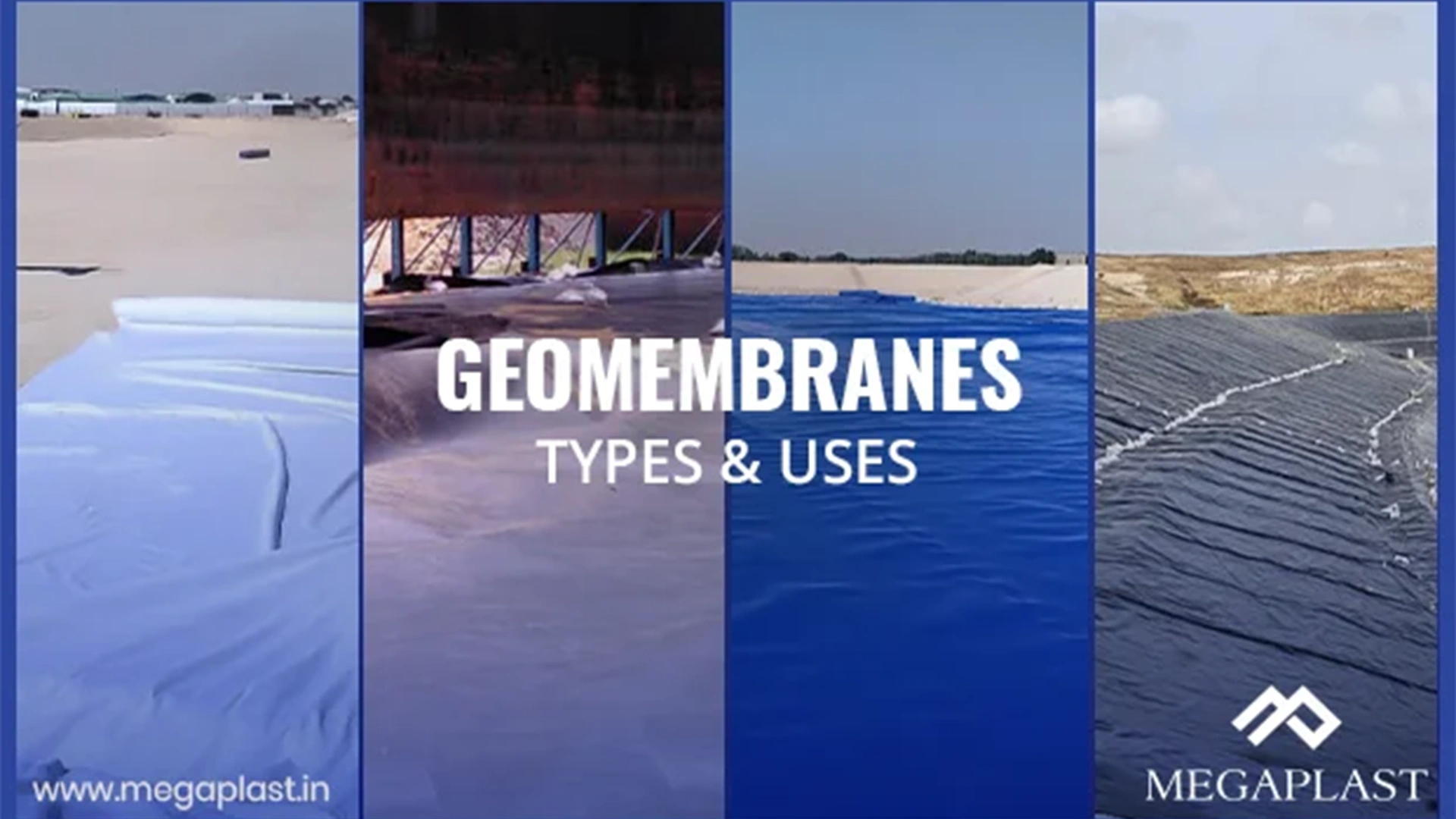
Both high-density and linear low-density polyethylene geomembranes are
common choices for secondary containment. Choosing between them depends
on the application and site demands.
HDPE: Strength and Textured Options
High-density polyethylene geomembranes are valued for their tensile
strength and chemical stability. Textured HDPE provides extra friction
for sloping or vertical surfaces, improving overall system stability
in banks and berms.
For customers seeking HDPE solutions, Megaplast’s Mega HDPE Liners
include product families tailored to different installation environments
and grip requirements. Explore the
HDPE Liners
and the broader
MegaLiners
range.
LLDPE: Flexibility and Elongation for Dynamic Conditions
LLDPE geomembranes offer greater flexibility and elongation, which helps
them accommodate differential settlement, thermal movement, and localized
stresses. This makes LLDPE a practical choice for applications such as
lined leach pads, caps, or other areas where deformation is expected.
See Megaplast’s
LLDPE Liners
for product options suited to these requirements.
Key Selection Criteria for Engineers and Procurement
When specifying geomembranes for petrochemical secondary containment,
evaluate the following parameters:
- Chemical compatibility:
Review the geomembrane’s resistance to the specific chemicals,
solvents, and concentrations present on site.
- Mechanical performance:
Consider tensile strength, puncture resistance, and tear resistance
relative to expected loads and substrate conditions.
- Flexibility and elongation:
These properties are important where ground movement, thermal cycling,
or differential settlement are expected. LLDPE often performs better
in these conditions.
- Surface texture:
Textured liners improve stability on slopes and vertical faces, while
smooth liners may be preferred for liner-to-liner welding in
flat-bottom applications.
- UV and weathering stability:
Select formulations and stabilizers appropriate for exposure.
Consider cover or protective layers where long-term exposure is
likely.
- Seam integrity and installation quality:
Seams are the most critical potential failure points. Robust field
welding and inspection regimes are essential.
- Supply and technical support:
Confirm manufacturer capacity, delivery timelines, and technical
support. Megaplast’s manufacturing footprint and experience, including
19+ years, 24,000 MT annual capacity, and presence in 30+ countries,
can be relevant to project planning.
For related containment products and configurations, review Megaplast’s
Geomembranes
and
Industrial Liners
pages.
Installation and Quality Assurance
Even a high-performance geomembrane can fail if installed or inspected
improperly. Best-practice considerations include:
- Use qualified installers:
Work with installers trained in polyethylene seam welding and
geomembrane handling.
- Implement a site-specific QA/QC plan:
Include seam inspection and integrity verification, inspection of
weld records, and documented repair procedures.
- Protect the liner during installation:
Protect liners from sharp debris, equipment damage, and excessive
stress during placement.
- Plan for long-term accessibility:
Plan for anchoring, drain collection, and accessible inspection
points to simplify long-term monitoring and maintenance.
Megaplast supports customers with product selection and technical
guidance, backed by a GAI-LAP- and NABL-certified Innovation Centre
to support R&D and problem-solving during the project lifecycle.
Conclusion
Selecting the right geomembrane for petrochemical secondary containment
requires matching material properties to site-specific chemical,
mechanical, and environmental conditions, while ensuring high-quality
installation and inspection.
HDPE and LLDPE each have clear advantages depending on strength, texture,
and flexibility needs. Procurement decisions should also factor in lead
times, manufacturer support, and long-term maintenance plans.
Talk to Megaplast
If you need help specifying a geomembrane for a secondary containment
project, Megaplast can advise on product selection and installation
considerations.
Request a quote
or contact our team to discuss MegaLiners and geomembrane options.
You can also reach us through the
contact page.
You can also reach out to us at info@mega-group.in or connect with us on WhatsApp at +91 83569 01123.