PE Film and Liner Quality Testing: Key Tests, Standards and Selection Guide
Introduction
Quality testing is essential when specifying polyethylene (PE) films and
liners for industrial, agricultural, and environmental applications. This
article outlines the laboratory tests Megaplast performs, explains what
each test means in practice, and offers guidance engineers, procurement
teams, and project managers can use when comparing suppliers or writing
specifications.
Why Robust Testing Matters
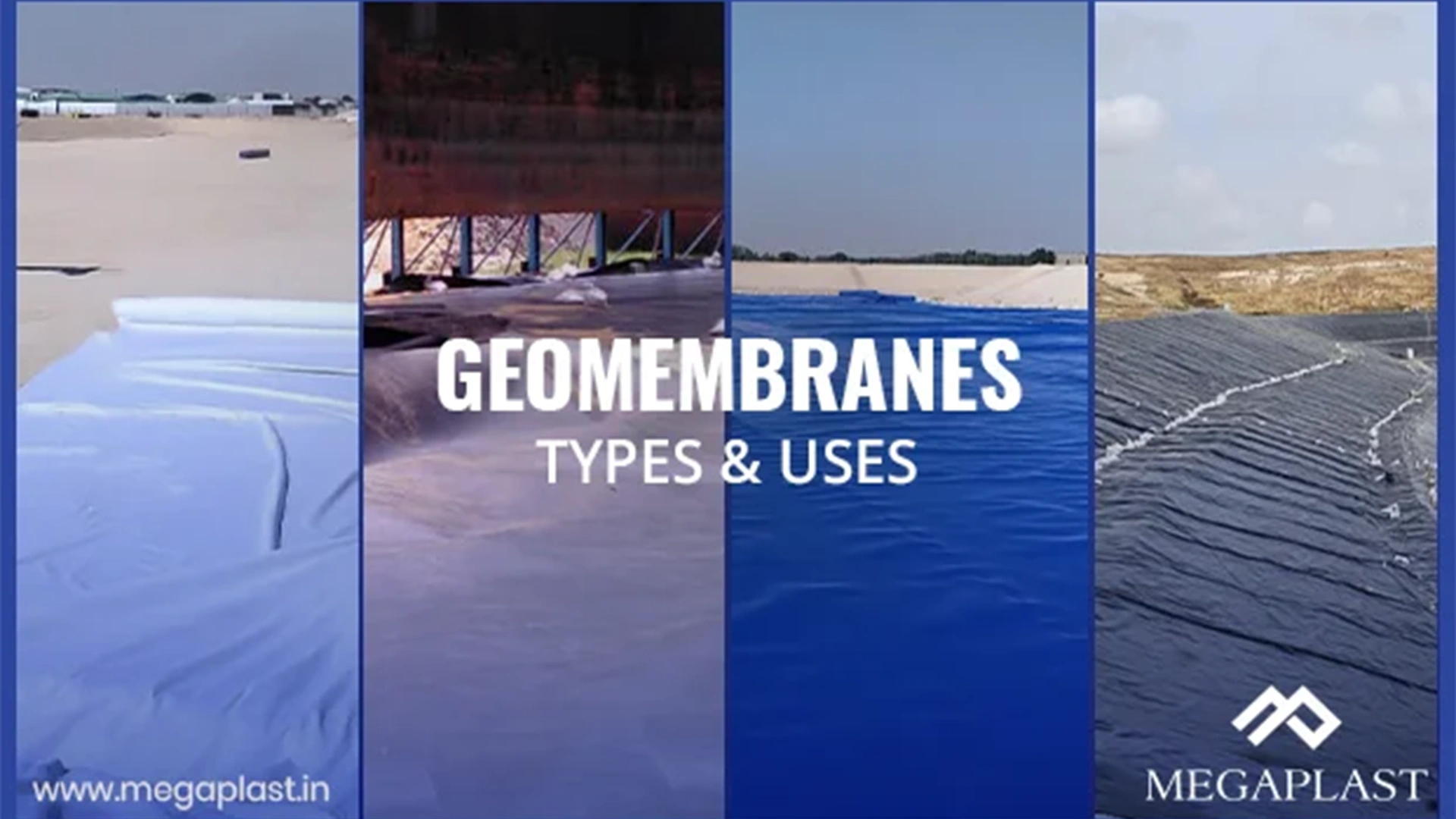
PE products such as geomembranes, industrial liners, and pond liners are
deployed in safety- or performance-critical applications including
containment, irrigation, landfill caps, and water storage.
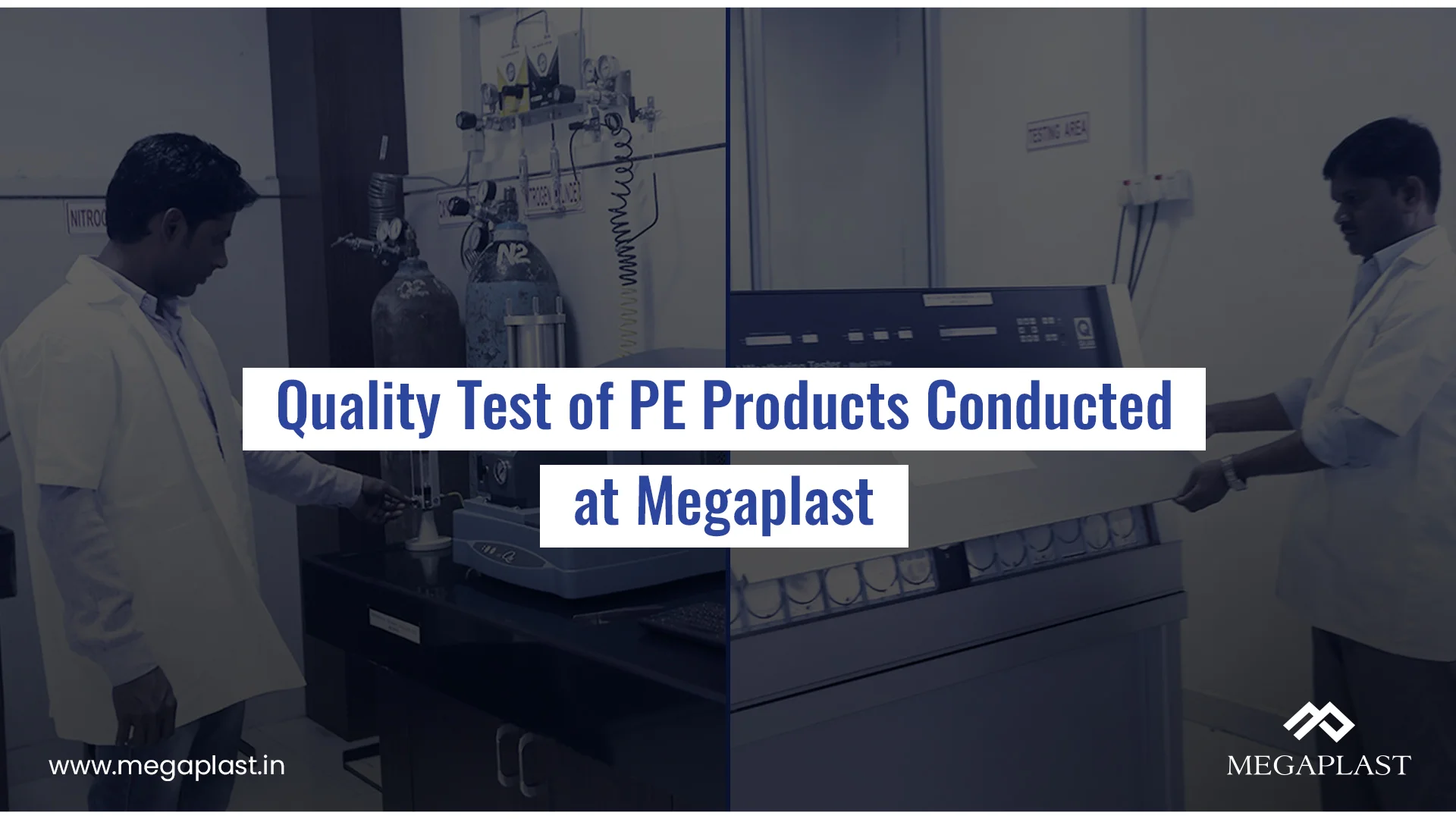
Laboratory testing helps ensure that raw materials are consistent, finished
products meet mechanical expectations, and batches behave predictably in
service. Megaplast supports these needs through on-site testing in its
GAI-LAP- and NABL-certified Innovation Centre and by working with
independent testing agencies when required.
Key Tests and What They Tell You
Melt Flow Index (MFI)
What it measures: The flow rate of molten polymer under
standard conditions. MFI is an indicator of molecular weight distribution
and processability.
Why it matters: Consistent MFI helps ensure extrusion and
welding behaviour are repeatable. When specifying liners or films, request
MFI ranges for the resin used so processors can confirm runnability and
expected film properties.
Tensile Strength and Elongation
What they measure: Tensile strength is the maximum stress
a sample withstands before failure, while elongation measures how much the
material stretches before breaking.
Why they matter: High tensile strength and adequate
elongation are critical for products exposed to mechanical stress, such as
landfill liners or heavy-duty covers. Review both ultimate strength and
elongation-at-break values to judge brittleness versus ductility.
Impact Resistance (Notched and Unnotched)
What it measures: A material’s ability to absorb sudden
loads or impacts without cracking. Tests simulate drops, punctures, or
sudden load changes.
Why it matters: Impact resistance is especially relevant
for liners handled on site or used in applications subject to debris,
ice, or heavy equipment traffic.
Thermal Stability and Heat Resistance
What it measures: The ability of a material to maintain
mechanical and dimensional integrity when exposed to elevated temperatures
during processing or in service.
Why it matters: Thermal testing helps assess whether a
material will retain performance in high-temperature environments or during
welding operations.
Contaminant and Defect Detection
What it measures: The presence of foreign particles, gel,
or inclusions that can weaken film or cause failures in service.
Why it matters: Visual and instrumental inspections reduce
the risk of localized failures. For geomembranes and pond liners, 100%
virgin PE resins and controlled manufacturing reduce contamination risk.
Even so, batch inspections should be documented.
How Test Results Should Influence Material Selection
- Geomembranes and containment liners:
Compare mechanical properties such as tensile and tear resistance,
environmental factors such as UV stabilization for pond liners, and
weldability characteristics when selecting products such as
MegaLiners
.
For higher stiffness and chemical resistance, review specialised
HDPE Liners
.
Where flexibility and elongation are required, consider
LLDPE Liners
.
- Pond and agricultural water containment:
For fish ponds, irrigation reservoirs, and water storage, verify that
the chosen
Pond Liners
meet low-permeability and UV-stability expectations stated by the
manufacturer. Lab reports should also confirm the resin grade and
thickness used.
- Industrial packaging and films:
For films used in packaging and handling, confirm resin MFI and
mechanical properties to ensure processing stability and end-use
performance. Megaplast’s broader film portfolio supports diverse
industrial needs.
Working with Megaplast and Third-Party Verification
Megaplast performs in-house testing and also collaborates with external
laboratories for independent verification when projects require
third-party certification.
When procuring critical materials, consider the following:
- Request batch-specific test certificates:
Ask for MTRs or QC reports that include the key tests relevant to your
application.
- Specify acceptance tolerances:
Define acceptable ranges rather than relying only on single pass/fail
statements. This helps avoid ambiguity during inspection and acceptance.
- Plan independent laboratory testing for high-risk projects:
Include independent laboratory testing in the procurement plan and
specify sampling methods and applicable test standards.
Quality Controls Across Production
Megaplast combines raw-material checks, including incoming resin MFI and
visual inspection, with in-process controls and final inspections to
maintain consistency.
Documentation and traceability of batches and test reports allow procurement
teams to confirm compliance and support long-term asset performance.
Conclusion
Understanding the meaning and limits of common PE tests, including MFI,
tensile, impact, thermal, and contamination checks, helps engineers and
buyers select the right material for their application and write clear,
testable specifications.
Megaplast’s on-site testing capabilities and product range, from
geomembranes and
MegaLiners
to
HDPE Liners
,
LLDPE Liners
,
and
Pond Liners
,
support projects that require demonstrable and documented performance.
Talk to Megaplast
If you need test reports, material datasheets, or specification support
for liners or films,
request a quote
or
contact Megaplast
to discuss project requirements.
For immediate enquiries, email
info@mega-group.in
or connect with us on WhatsApp at +91 83569 01123 to arrange batch certificates or third-party
testing.