Geomembranes for Oil & Gas: Applications, Selection, and Procurement Guide
Responsible containment is central to modern oil and gas operations. Geomembranes provide an engineered, cost-effective method to manage produced water, secondary containment, spill control and other fluid barriers on pads, ponds and tank bunds. This guide explains where geomembranes are used in the oil and gas sector, how to select between HDPE and LLDPE options, and what procurement and installation teams should specify to reduce project risk.
Why geomembranes matter in oil & gas
Geomembranes act as low-permeability barriers that limit migration of hydrocarbons, produced water and chemicals into soils and groundwater. For operators, appropriate lining solutions reduce environmental risk, simplify site remediation, and can lower lifecycle costs when compared with repeated repairs or contaminated-site remediation.
Megaplast’s range of geomembrane solutions, marketed under the MegaLiners family, is designed to meet the typical requirements of oilfield containment: impermeability, tear and puncture resistance, chemical stability and UV resistance. For product details see Megaplast’s
Geomembranes overview and the
MegaLiners family.
Typical applications in oil & gas operations
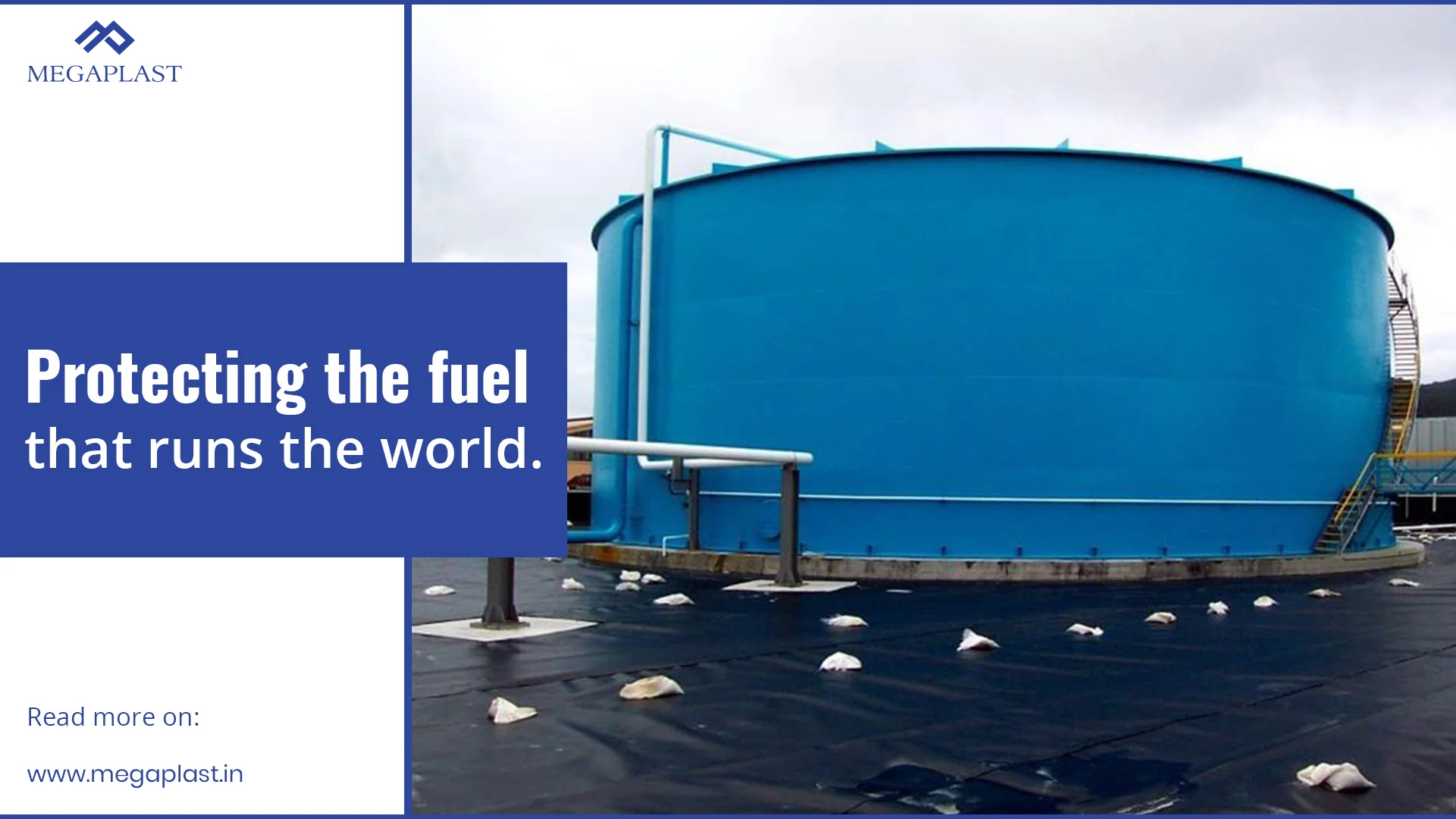
- Secondary containment for drilling and well pads to protect soil and groundwater from spills and equipment leaks.
- Produced water and surface impoundments where liquids must be contained pending treatment or disposal.
- Tank and drum bund lining to capture leaks and simplify clean-up procedures.
- Temporary or permanent spill containment zones and lined sumps for stormwater control.
- Lined hazardous-waste storage and solid-waste handling areas where chemical resistance is required.
For water-specific containment such as produced-water ponds or temporary process reservoirs, Megaplast’s
Pond Liners are a relevant starting point.
Choosing between HDPE and LLDPE geomembranes
-
HDPE (high-density polyethylene)
Suited to applications where high stiffness, puncture resistance and low permeability are priorities—typical uses include long-term pond liners, tank bunds and primary containment. Megaplast’s HDPE offerings include variants such as Mega Diamond, Mega Platinum and Mega Gold to match differing project needs; see HDPE Liners.
-
LLDPE (linear low-density polyethylene)
Offers greater flexibility and elongation, which is useful on uneven subgrades, floating cover applications and dynamic substrates such as leach pads or liners subject to settlement or movement. Review LLDPE Liners when flexibility is a priority.
Selecting the polymer should be driven by site conditions (substrate, expected settlement), fluid chemistry, expected lifetime and local climate (UV exposure and temperature cycles).
Design, installation and quality assurance considerations
-
Chemical compatibility
Specify geomembrane grade after reviewing produced-water chemistry, hydrocarbons present and any treatment chemicals. Liner selection must account for exposure to solvents, acids or alkalis used on site.
-
Seam welding and inspection
Specify qualified weld procedures and non-destructive testing of welds (vacuum box, air-lance, spark testing or ultrasonic methods as appropriate) to confirm seam integrity.
-
Surface preparation and protection
Ensure subgrade preparation to remove sharp objects, and use geotextile protection layers where mechanical damage or differential settlement is a risk.
-
UV and weathering
For exposed liners, ensure the product includes UV stabilisation or plan for cover/ballasting to limit degradation. Megaplast formulates geomembranes for chemical and UV stability consistent with typical industry requirements.
-
Testing and certification
Require factory QA documentation and on-site testing records. Megaplast supports testing and product development from its GAI-LAP- and NABL-certified Innovation Centre, which can assist with material validation and bespoke formulations.
-
Lifecycle planning
Include inspection intervals, routine maintenance, and contingency plans for leak detection and repair in procurement documents.
Procurement checklist for engineers and buyers
- Specify material type (HDPE vs LLDPE) and product family (e.g., MegaLiners HDPE/LLDPE) and reference the expected chemical exposure and temperature range.
- Define seam welding procedures, welder qualification requirements and required inspection/testing protocols.
- Require factory and site QA documentation raw-material traceability, production checks and delivered roll certificates.
- Plan for logistics roll sizes, handling equipment, and on-site storage to avoid damage before installation. Megaplast’s manufacturing scale and footprint support large-volume supply—note the company’s 24,000 MT annual production capacity and presence in 30+ countries.
- Request samples and a technical data sheet early in the tendering process to validate flexibility, puncture resistance and UV performance under expected site conditions.
Working with a manufacturer
Choose a manufacturer that offers technical support during specification, detailed installation guidance, and post-installation testing. Megaplast combines over 19 years of experience, an established manufacturing footprint and an in-house Innovation Centre to support project teams from specification through delivery. For containment applications beyond geomembranes, Megaplast also offers related products such as
Industrial Liners.
Conclusion
Geomembranes are an effective engineered control for many oil and gas containment needs. Matching polymer type, product variant and installation controls to site conditions reduces operational and environmental risk. Early engagement between engineering, procurement and the liner manufacturer ensures the selected solution meets performance and lifecycle expectations.
Talk to Megaplast
To discuss a specific containment project,
request a quote or
contact Megaplast to review MegaLiners and pond-liner options. You can also reach our team at
info@mega-group.in or connect with us on WhatsApp at +91 83569 01123 to arrange technical support or sample requests.