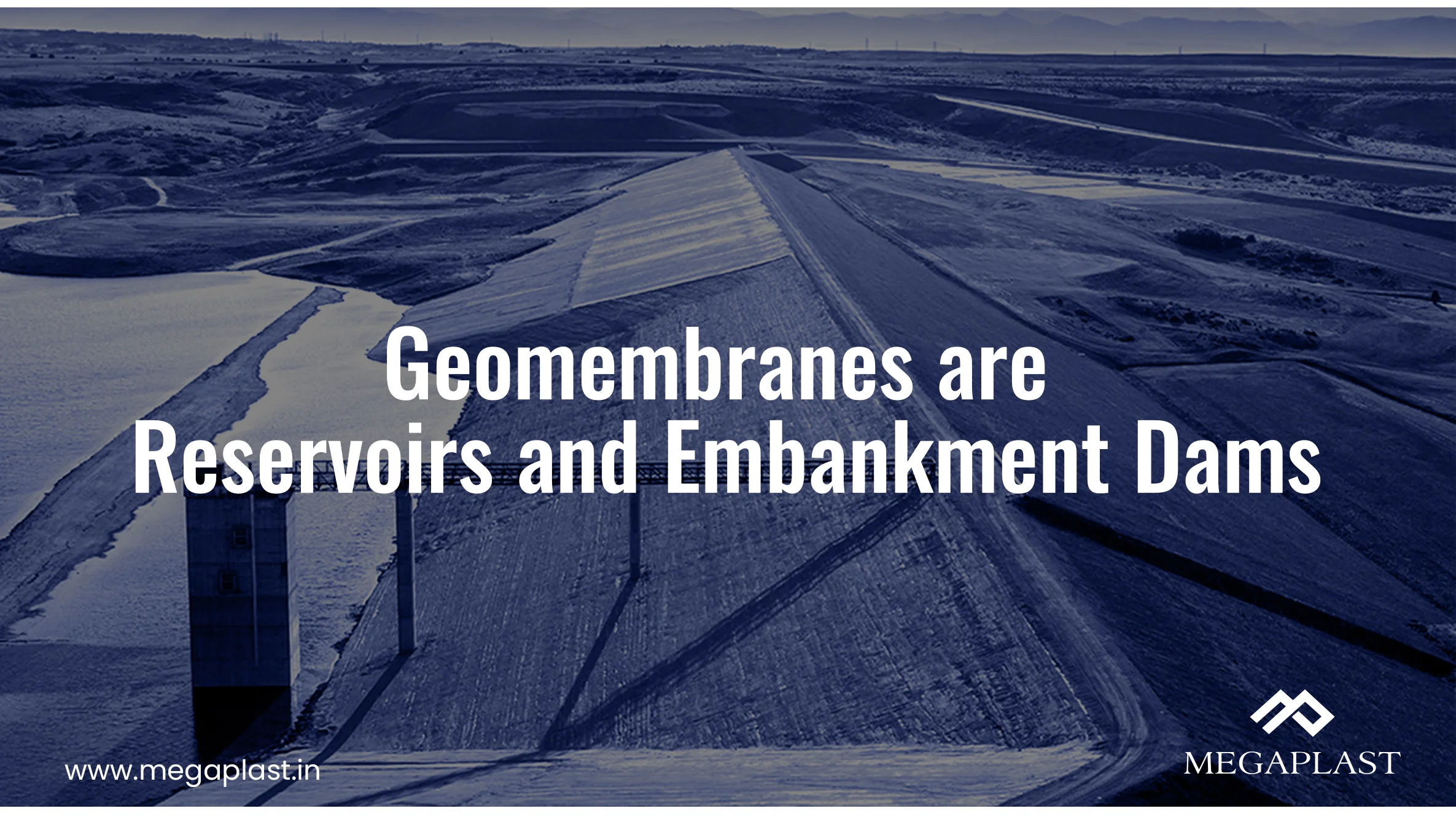
PE Geomembranes for Reservoirs and Embankment Dams: Selection, Design and Installation
Geomembrane liners are a standard engineering solution to control seepage and protect embankments
in water-retaining works. This article summarizes the practical benefits of polyethylene (PE)
geomembranes for reservoirs and embankment dams and gives guidance on material selection, design
considerations, and installation issues relevant to engineers, procurement teams, and project owners.
Why Use PE Geomembranes in Reservoirs and Embankment Dams
- Seepage Control: Geomembranes provide a continuous low-permeability barrier
that reduces leakage through foundation soils and embankment bodies, helping to preserve
reservoir water levels and reduce downstream seepage risks.
- Erosion Protection: When combined with appropriate cover layers such as
filters, geotextiles and rock armoring, liners limit internal erosion and piping in embankments
constructed from soils and rock.
- Contamination Prevention: Liners help prevent ingress of surface pollutants
into stored water and can also limit leachate migration where contaminants are present.
Key PE Material Choices: HDPE vs LLDPE
HDPE (High-Density Polyethylene)
- Use Cases: HDPE is suitable where puncture and tensile strength are primary
design drivers, such as exposed geomembranes under ballast, steep slopes, or areas where heavy
equipment traffic is anticipated.
- Attributes: HDPE variants emphasize high strength, tear and puncture
resistance, and long-term chemical and UV stability. Megaplast’s
Mega HDPE Liners,
such as Mega Diamond, Mega Platinum and Mega Gold, are positioned for these demanding situations.
LLDPE (Linear Low-Density Polyethylene)
- Use Cases: LLDPE is suitable for applications requiring greater flexibility
and elongation, such as highly irregular foundations, floating covers, or areas with significant
differential settlement.
- Attributes: LLDPE offers improved flexibility and stress-crack resistance in
dynamic conditions. See Megaplast’s
Mega LLDPE Liners
for these options.
Product Families and Surface Textures
Megaplast supplies geomembranes in smooth and textured variants to improve interface shear and
ballast interaction. The
MegaLiners
family includes both smooth and single- or double-textured liners. Selection depends on slope
geometry and the type of overlying material.
Design and Installation Considerations
- Subgrade Preparation: A uniform, inspected subgrade with removal of sharp
stones and protrusions is essential. Cushioning layers such as sand or geotextile reduce
puncture risk.
- Seaming and Quality Control: Thermal welding of PE geomembranes is standard.
Qualified welding procedures and non-destructive testing, such as air channel tests, spark
testing, or peel/tensile sampling, are recommended to verify seam integrity.
- Transitional Details: Pay attention to toe and crest terminations, anchor
trenches, and connections to structures such as intakes and spillways. Proper detailing
prevents localized leakage and mechanical damage.
- UV and Chemical Exposure: Choose a grade with appropriate UV stabilization
and chemical resistance for the stored fluid and local climate. For water storage and ponds,
Megaplast’s
Pond Liners
are offered in 100% virgin PE with high UV stabilization.
- Installation Environment: Plan for weather, ground slope, equipment access,
and sequencing to minimize liner damage during placement and backfilling.
Inspection, Monitoring and Maintenance
Routine inspection and early detection of damage extend service life. Typical practices include
scheduled visual inspections, leak-detection surveys where applicable, monitoring piezometric
levels, and maintaining ballast or riprap cover. Repair procedures should follow manufacturer
guidelines and use compatible welding and patching materials.
Other Water-Related Applications
Beyond reservoirs and embankment dams, PE geomembranes are widely used for canal lining, ponds,
lagoons, leachate containment, and floating covers. Select the membrane type and texture to match
hydraulic, mechanical, and environmental loading for each application.
Conclusion
Selecting the right geomembrane for a reservoir or embankment dam is a balance of mechanical
strength, flexibility, seam quality, and installation practice. HDPE options suit high-strength
requirements while LLDPE offers flexibility for uneven or dynamic substrates. Proper subgrade
preparation, welding quality control, and routine inspection are equally important to achieve
reliable containment performance.
Talk to Megaplast
Megaplast has 19+ years of experience manufacturing PE geomembrane solutions and serves projects
across 30+ countries. For technical guidance or to discuss liner selection for your reservoir or
embankment dam, review our
Geomembranes
and
MegaLiners
ranges.
Then
request a quote
or
contact Megaplast.
You can also email
info@mega-group.in
or connect with us in WhatsApp +918356901123.