Geomembrane Solutions for Civil Engineering: Choosing the Right PE Liner
Geomembranes are engineered polymer liners used to prevent fluid movement and protect soil and groundwater in civil engineering projects. This article summarizes the primary geomembrane options, key selection factors, and common applications to help engineers, procurement teams, and project managers choose the right polyethylene liner for containment and water-management needs.
Why use geomembranes in civil engineering
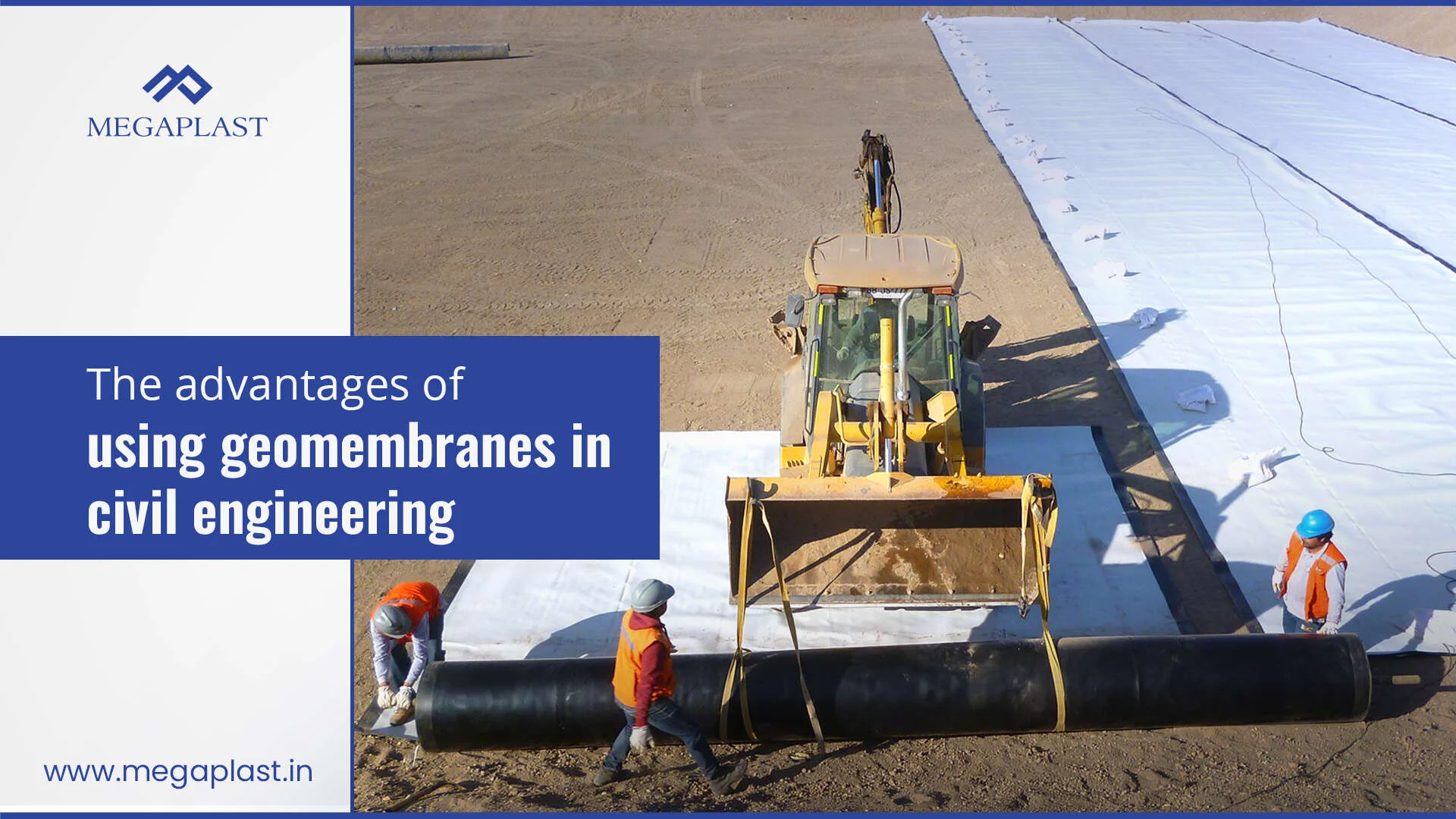
Geomembranes provide a low-permeability barrier that reduces seepage and protects underlying soils and groundwater. Compared with traditional natural or rigid barriers, modern PE geomembranes offer advantages that often improve long-term performance and simplify installation: typically low permeability, resistance to many chemicals and UV exposure, and a range of textures and thicknesses optimized for different site conditions. Megaplast highlights these benefits for a variety of infrastructure and environmental projects.
Common geomembrane types and Megaplast product lines
HDPE (High-Density Polyethylene) liners
HDPE geomembranes are widely used where chemical resistance, stiffness, and puncture/tear resistance are priorities. Megaplast markets its HDPE offerings under the Mega HDPE Liners range, which includes product families such as Mega Diamond, Mega Platinum, and Mega Gold. HDPE is commonly chosen for landfill liners, leachate collection systems, containment ponds, and mining applications where robust mechanical and chemical stability are required. Learn more about Megaplast’s
HDPE Liners.
LLDPE (Linear Low-Density Polyethylene) liners
LLDPE is more flexible and exhibits greater elongation than HDPE, making it well suited to projects with variable geometry, settlement, or dynamic loads. Typical uses include landfill caps, leach pads, floating covers, and water-containment systems where flexibility and seam performance under movement are important. For applications that need a softer, more conformable liner, consider Megaplast’s
LLDPE Liners.
Textures and variants
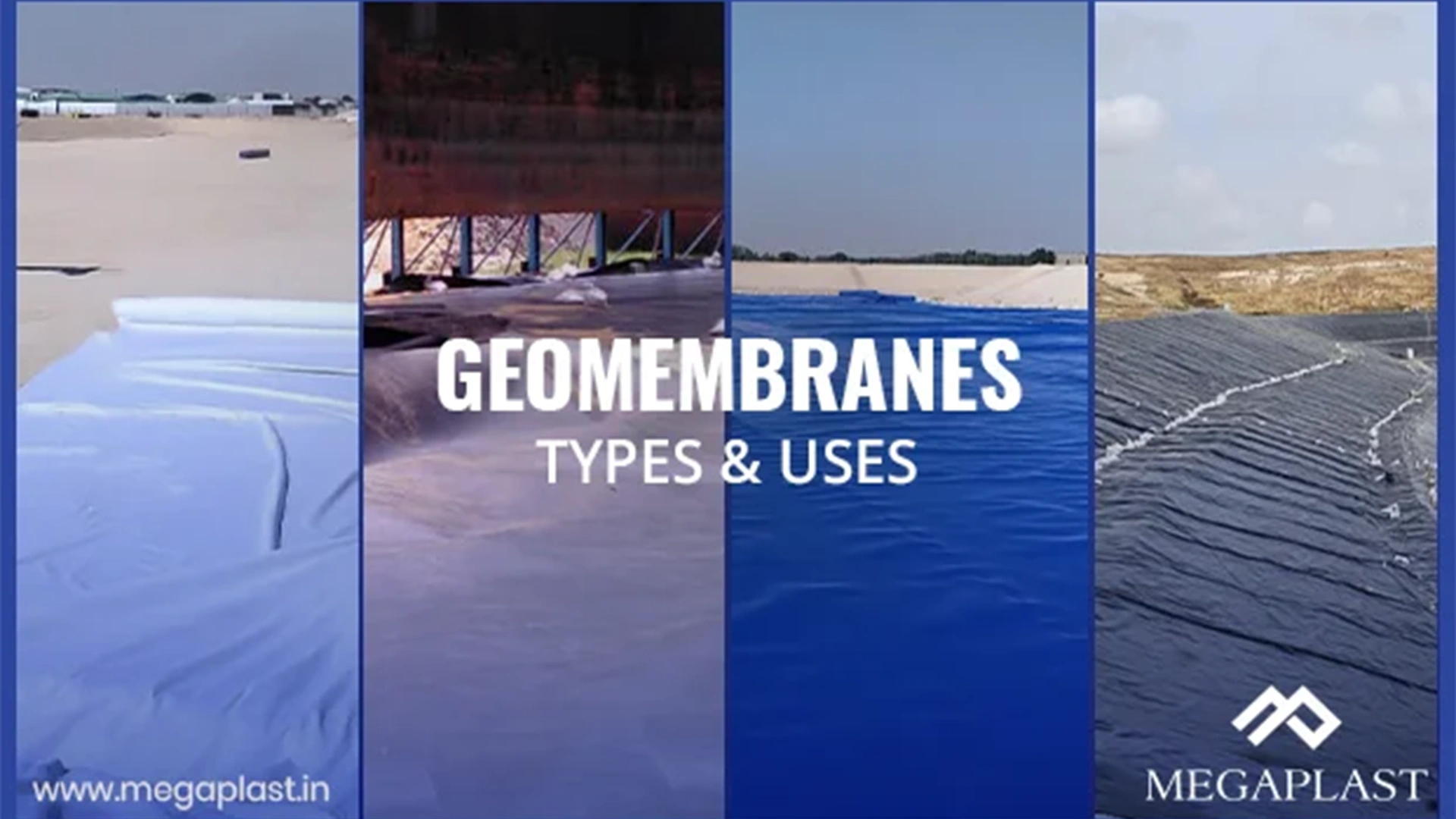
Geomembranes are available in smooth, single-textured, and double-textured variants. Textured surfaces improve friction against soil or ballast and are often selected for slopes, caps, or exposed installations to reduce slippage. Megaplast supplies these options under the
MegaLiners family to match site-specific installation and performance needs.
Pond and agricultural liners
For fish, agricultural ponds, irrigation reservoirs, and water storage tanks, pond liners provide a reliable barrier with low permeability and high UV stabilization. Megaplast’s
Pond Liners are specified in thicknesses from 0.5–2 mm and use 100% virgin PE to support long-term water containment in agricultural and aquaculture settings.
Key factors when specifying a geomembrane
-
Project exposure and chemical environment
Select a resin and thickness with appropriate chemical compatibility for the contained fluids.
-
Mechanical stresses and puncture risk
Account for construction traffic, sharp aggregate, and post-installation loads when choosing thickness and reinforcement.
-
Flexibility and elongation requirements
Use LLDPE for applications that will experience settlement, differential movement, or frequent deformation; HDPE is preferred for high-stiffness needs.
-
Surface texture and slope stability
Specify textured finishes for slopes or exposed applications to improve friction and reduce ballast requirements.
-
Seaming and installation
Evaluate seaming methods (thermal welding, extrusion welding) and contractor experience. Proper seaming is critical to long-term containment performance.
-
Quality assurance and testing
Work with manufacturers that provide factory QA, documented material properties, and access to accredited testing. Megaplast supports product testing and development through its GAI-LAP- and NABL-certified Innovation Centre.
Installation and lifecycle considerations
Successful geomembrane performance depends on careful site preparation, correct material selection, and experienced installation. Common best practices include: preparing a smooth, compacted subgrade; using protective geotextiles or sand layers where puncture risk is high; controlling construction traffic on installed liners; and performing on-site seam testing and inspection. For large projects, supplier reliability and production capacity affect delivery schedules—Megaplast’s manufacturing footprint and annual capacity help ensure supply continuity for large-scale jobs.
Typical applications
Geomembranes are used across many sectors, including:
- Landfills and waste containment
- Mining leach pads and heap leach systems
- Reservoirs, ponds, and irrigation/storage tanks
- Canal and lining rehabilitation
- Industrial secondary containment and bunds
- Floating covers and lagoon caps
Megaplast’s product lines for these applications include its broader
Geomembranes range and specialized liner families referenced above.
Conclusion
Selecting the appropriate geomembrane requires balancing chemical compatibility, mechanical demands, flexibility, seam integrity, and installation conditions. Using the right PE material—HDPE for stiffness and chemical resistance, LLDPE for flexibility, and purpose-designed pond liners for water storage—helps ensure durable, cost-effective containment. Partnering with a manufacturer that provides product options, testing support, and reliable supply can reduce project risk and simplify specification.
Talk to Megaplast
To discuss liner selection for your project,
request a quote or
contact Megaplast to speak with our technical team. For immediate assistance you can also email
info@mega-group.in or connect with us on WhatsApp at +91 83569 01123.