Floating Covers for Water Management: Benefits, Materials and Applications
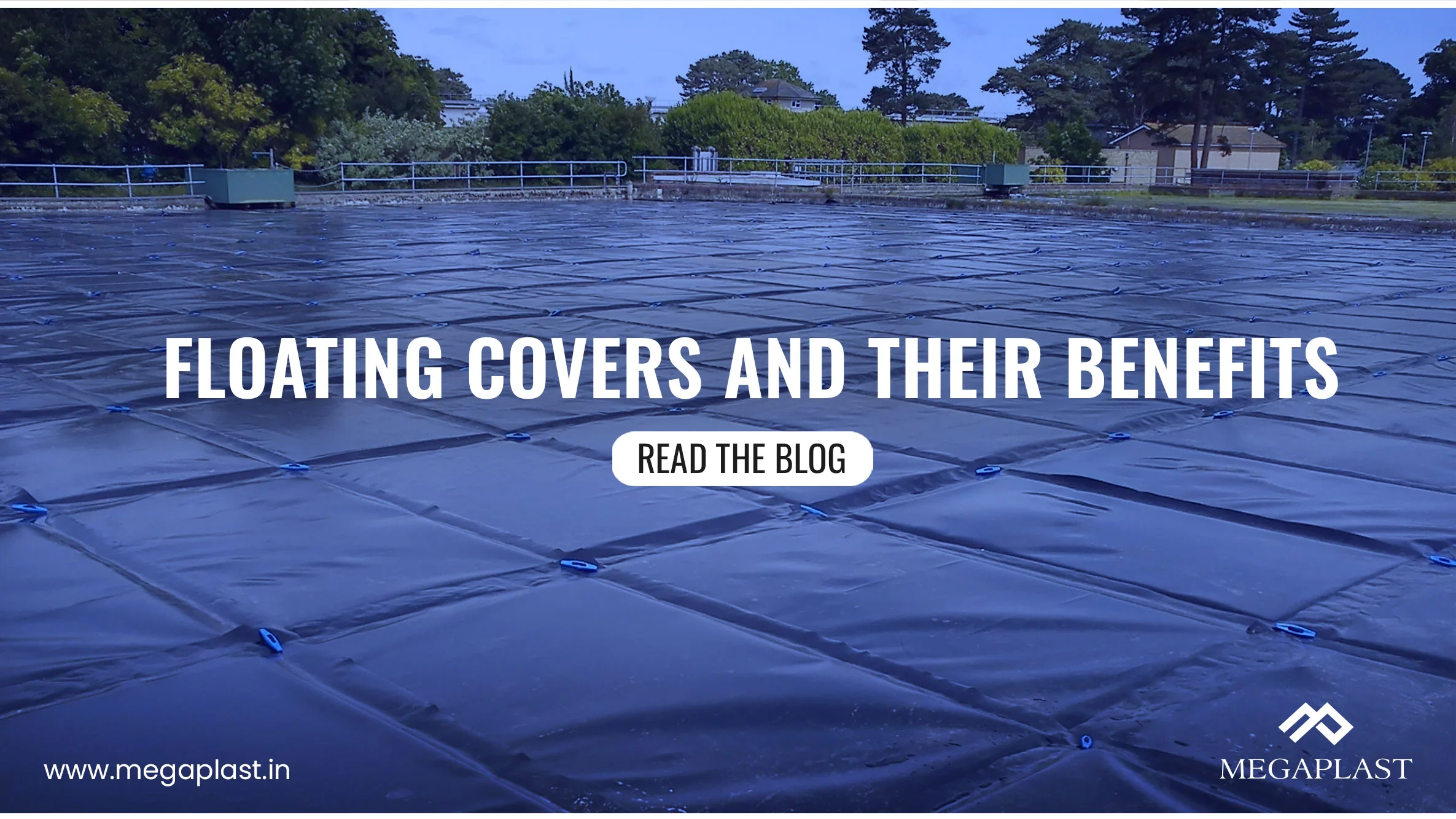
Floating covers are flexible geomembrane sheets laid on the surface of ponds, reservoirs, lagoons
and digesters to reduce evaporation, limit contamination and control odour and gas release. Built
from polyethylene-based geomembranes, they are a practical solution for water management,
aquaculture and industrial containment. This article summarises the benefits, material choices,
key applications and practical considerations to help engineers, procurement teams and farmers
evaluate floating-cover solutions.
Key Benefits of Floating Covers
1. Reduced Evaporation
Floating covers form a physical barrier that limits direct water exposure to air and sunlight,
reducing evaporation losses. This is valuable in arid regions, seasonal reservoirs and irrigation
ponds where conserving stored water has direct operational and cost benefits.
2. Improved Water Quality and Algae Control
By limiting sunlight penetration and surface turbulence, floating covers reduce conditions that
favour algal blooms and excessive aquatic plant growth. This helps maintain water clarity and
reduces the need for frequent mechanical or chemical treatments.
3. Containment of Odours, Emissions and Chemicals
Covers help contain volatile odours and can act as a secondary barrier in lagoon and tank systems
to reduce fugitive emissions. In industrial and waste-handling applications, a robust geomembrane
barrier can limit the escape of vapours and reduce the risk of surface contamination.
4. Gas Collection in Managed Systems
In anaerobic digesters and covered lagoons, floating geomembrane covers can be configured to
capture biogas for energy recovery or controlled treatment, improving process efficiency and
safety when integrated with appropriate collection systems.
5. Benefits for Aquaculture
Floating covers contribute to a controlled environment by moderating temperature swings at the
water surface, reducing contamination risks from wind-blown debris, and helping to control disease
vectors—complementing the use of high-quality
Pond Liners
for pond base protection.
Material Selection: HDPE vs LLDPE
Selecting the right polymer depends on site conditions and project priorities.
- HDPE (High-Density Polyethylene): HDPE offers high strength, tear and puncture
resistance, and good chemical and UV stability. These properties make
HDPE Liners
a strong choice where mechanical durability and long-term surface resistance are priorities.
- LLDPE (Linear Low-Density Polyethylene): LLDPE provides greater flexibility
and elongation, which helps covers tolerate settlement, movement and dynamic wave action.
LLDPE Liners
are often preferred where flexibility and conformability are required.
Megaplast’s
MegaLiners
family covers both material approaches, allowing selection based on project-specific strength or
flexibility needs.
Common Applications
- Water Reservoirs: Potable and non-potable water reservoirs where evaporation
control and contamination prevention are priorities.
- Agricultural and Irrigation Ponds: Agricultural and irrigation ponds, paired
with
Pond Liners
to protect stored water and support crop irrigation.
- Sewage and Industrial Lagoons: Sewage and industrial lagoons where odour
control and emissions reduction are required.
- Anaerobic Digesters and Biogas Systems: Anaerobic digesters and biogas systems
that need a floating membrane for gas capture.
- Aquaculture Operations: Aquaculture operations seeking better biosecurity and
thermal regulation at the water surface.
Practical Considerations for Specification and Procurement
- Match Material to Site Loads: Choose HDPE where puncture or chemical resistance
is essential; choose LLDPE where flexibility and elongation are needed.
- UV Stability: Ensure the selected geomembrane offers UV stabilization
appropriate for expected exposure. Megaplast’s product lines include options with UV stability
suited to outdoor use.
- Integration with Containment Systems: Plan for anchoring, perimeter sealing,
and interfaces with inlet and outlet structures during design to avoid weak points.
- Inspection and Maintenance: Design access and inspection intervals into the
operating plan to detect and repair any damage promptly.
- Vendor Capabilities: Evaluate manufacturer experience, production capacity and
R&D support. Megaplast has 19+ years of experience, a GAI-LAP- and NABL-certified Innovation
Centre, and a broad manufacturing footprint to support commercial-scale projects.
Conclusion
Floating covers are a practical, cost-effective component of modern water-management systems.
When specified and installed correctly, polyethylene geomembrane covers reduce evaporation,
improve water quality, and provide containment and gas-capture options across agricultural,
municipal and industrial applications. Material choice—HDPE vs LLDPE—UV stability and integration
with site infrastructure are the main drivers of long-term performance.
Talk to Megaplast
If you are evaluating floating covers for reservoirs, ponds or industrial lagoons, request a
specification or sample and compare HDPE and LLDPE options in the
MegaLiners
range.
To get started,
request a quote
or
contact Megaplast.
You can also reach us at
info@mega-group.in
or +91 22-61066000 for project enquiries.
Contact us with your queries at info@mega-group.in or via WhatsApp at +91 83569 01123.